



What Is WPC Decking?
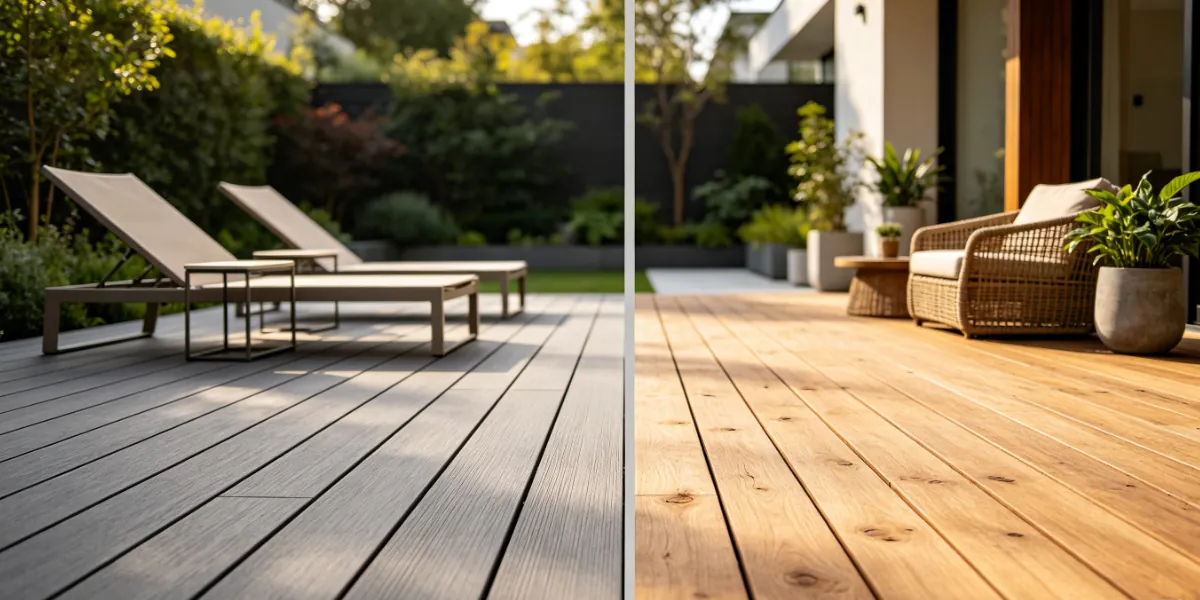
WPC decking is a modern composite flooring material manufactured from a blend of wood fibers and plastic polymers. These components are fused via extrusion to produce boards that mimic the appearance of natural timber while offering superior outdoor resistance.
-
First-generation (Standard WPC Decking):
It features an identical core and surface, composed of homogeneous wood flour blended with PE/PP/PVC. This is the economical basic option.
-
Second-generation (Co-extruded WPC Decking):
The WPC core is fully covered by a protective layer of polyethylene or polypropylene compound. It delivers enhanced wear, stain and fade resistance, serving as the mainstream mid-to-high-end product.
-
Third-generation (ASA Co-extruded WPC Decking):
Encapsulated with a highly weather-resistant ASA co-extruded layer, it boasts outstanding weatherability, UV resistance and colour retention. It represents premium top-tier outdoor building material.
What Is Wood Decking?
Wood decking is made from natural timber species such as pine, cedar, teak, hardwood, and other outdoor-grade woods.
Because of its natural grain, color variation, and authentic texture, wood decking remains a popular choice for homeowners who prefer a traditional outdoor look.
However, natural wood requires regular maintenance to protect it from:
- Moisture damage
- Fungal growth
- Insect attacks
- UV fading
- Cracking and warping
WPC Decking vs Wood Decking: Key Differences
1. Durability and Weather Resistance
Outdoor decking is constantly exposed to sunlight, rain, temperature changes, and humidity. Durability is one of the most important factors when selecting decking materials.
WPC Decking
WPC decking has excellent resistance against outdoor elements because the plastic component helps reduce water absorption.
Advantages:
- Does not easily rot or decay
- Resistant to moisture
- Less affected by insects
- Better dimensional stability
- Suitable for humid environments
Wood Decking
Natural wood is strong but more vulnerable to environmental conditions.
Without proper treatment, wood decking may experience:
- Swelling after absorbing water
- Cracking during dry seasons
- Mold growth in humid areas
- Termite damage
Winner: WPC Decking
For areas with high humidity, heavy rainfall, or frequent temperature changes, WPC decking generally provides better long-term performance.
Cons: WPC decking conducts heat efficiently. Dark-coloured composite boards can become uncomfortably hot to touch under direct sunlight.
2. Maintenance Requirements
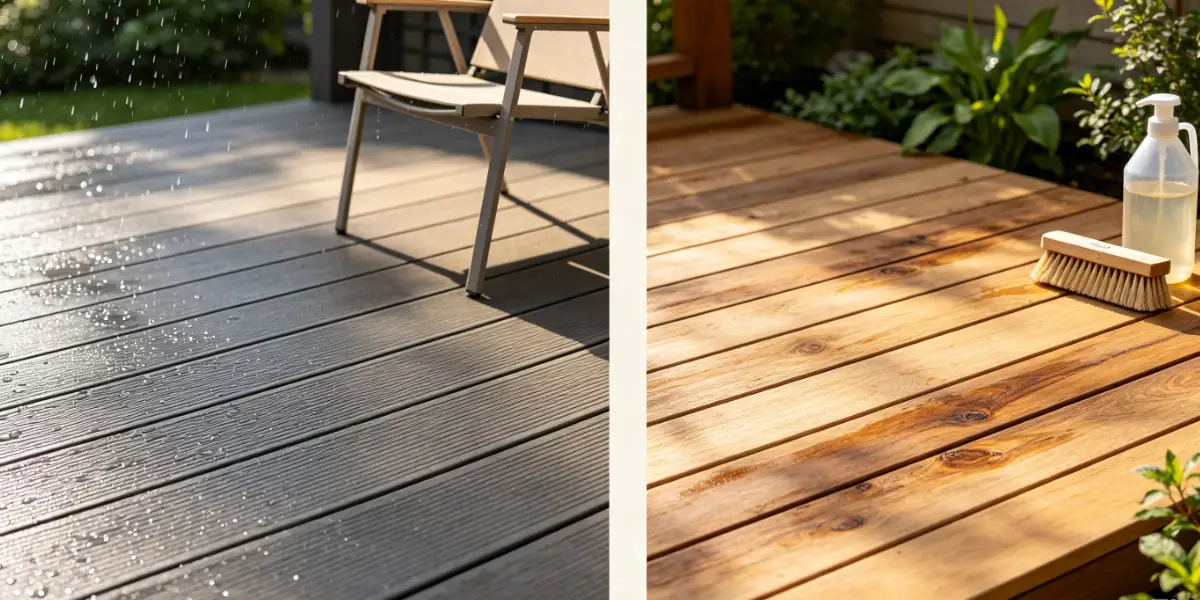
Maintenance is a major difference between WPC decking and wood decking.WPC composite decking demands almost no ongoing maintenance, and cleaning is quick and straightforward. You can use dedicated composite deck cleaner that attaches directly to your garden hose. Simply spray it across the deck before each summer — the whole job takes roughly 15 minutes. For heavier dirt, a pressure washer works well to refresh the surface.
WPC Decking Maintenance
WPC decking requires minimal maintenance:
- Occasional removal of dirt and debris
- No need for painting or sealing
Wood Decking Maintenance
Wood decking usually requires:
- Regular staining
- Waterproof coating
- Sanding
- Surface treatment
To maintain its looks and durability, wooden decking typically needs servicing every 1–3 years. Neglecting maintenance for extended periods leads to gradual fading, which ruins its aesthetics and shortens its lifespan.
Winner: WPC Decking
For homeowners and commercial projects looking for a low-maintenance solution, WPC decking is a more convenient choice.
Tip: The textured surface of composite decking delivers reliable anti-slip performance even when wet. This is a major advantage for pool surrounds and outdoor areas used by children.
3. Appearance and Design Options
Appearance is another important factor when choosing outdoor flooring.
Wood Decking
The biggest advantage of natural wood is its authentic appearance.
Benefits:
- Natural wood grain
- Unique texture
- Warm feeling
- Traditional outdoor style
Each wood board has different patterns, making every installation unique.
WPC Decking
Modern WPC decking technology allows manufacturers to create realistic wood grain surfaces.
Available options include:
- Oak wood texture
- Teak appearance
- Walnut colors
- Grey modern styles
- Various surface patterns
Winner: Tie
Wood provides the most natural appearance, while WPC offers more consistent colors and design choices.
4. Lifespan
The service life of outdoor decking depends on material quality, installation, and maintenance.
| Material | Average Lifespan |
|---|---|
| WPC Decking | 15–25 years |
| Wood Decking | 10–20 years |
High-quality WPC decking can maintain its performance for many years with minimal maintenance.
Wood decking can also last a long time, especially when using durable hardwood species and proper protection.
Winner: WPC Decking
5. Installation and Usage
Both WPC decking and wood decking can be installed using similar methods, including:
- Joist systems
- Hidden clips
- Screws
However, WPC decking usually offers more stable performance after installation because it is less affected by moisture changes.
For large outdoor projects such as:
- Hotels
- Resorts
- Public walkways
- Commercial landscapes
WPC decking can reduce future maintenance costs.
Winner: WPC Decking
6. Environmental Considerations
Wood Decking
Natural wood is renewable, especially when sourced from responsibly managed forests.
However, excessive timber harvesting can impact forests if not properly controlled.
WPC Decking
WPC decking often uses recycled plastics and wood fibers, helping reduce waste.
Benefits include:
- Use of recycled materials
- Longer replacement cycles
- Reduced maintenance chemicals
Winner: Depends on sourcing
Both materials can be environmentally friendly when produced responsibly.
WPC Decking vs Wood Decking Comparison Table
| Feature | WPC Decking | Wood Decking |
|---|---|---|
| Material | Wood fiber + plastic composite | Natural timber |
| Water Resistance | Excellent | Requires treatment |
| Maintenance | Low | High |
| Rot Resistance | Excellent | Depends on wood species |
| Insect Resistance | High | Requires protection |
| Appearance | Wood-like | Natural wood |
| Lifespan | 15–25 years | 10–20 years |
| Installation | Easy | Moderate |
| Long-Term Cost | Lower maintenance cost | Higher maintenance cost |
Which Decking Material Should You Choose?
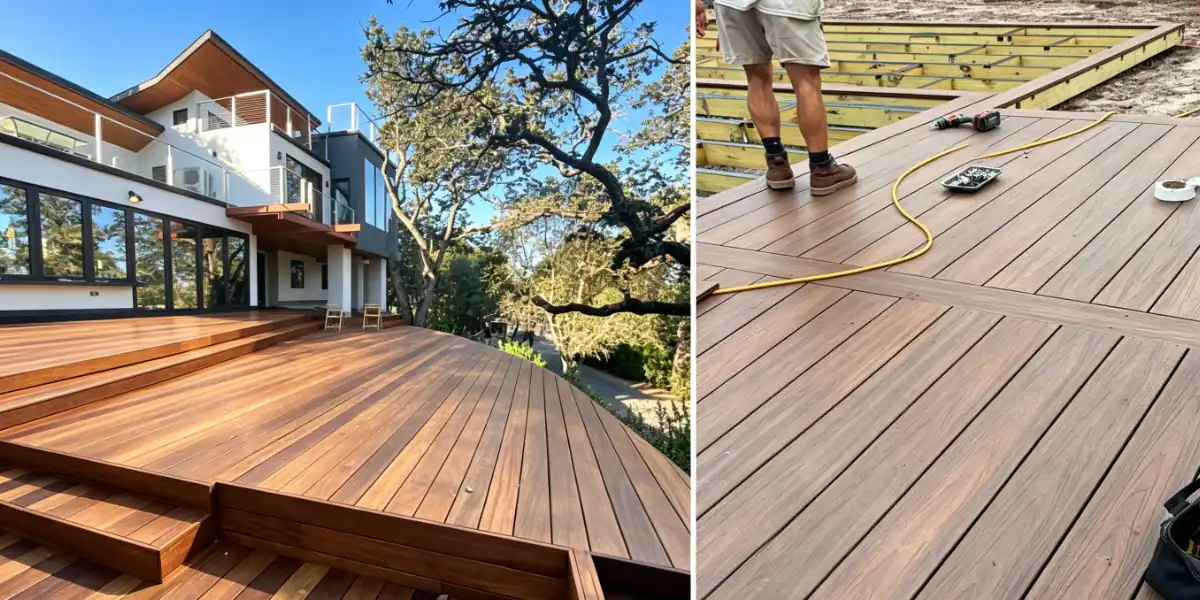
The best choice depends on your project requirements.
Choose WPC Decking If You Need:
- Low maintenance outdoor flooring
- Long service life
- Better moisture resistance
- Stable performance in changing weather
- Commercial or residential outdoor applications
WPC decking is especially suitable for:
- Gardens
- Balconies
- Pool decks
- Outdoor walkways
- Public spaces
Choose Wood Decking If You Prefer:
- Authentic natural wood appearance
- Traditional outdoor design
- The feeling of real timber
- A material that can be refinished over time
Conclusion: WPC Decking vs Wood Decking, Which Is Better?
When it comes to plastic waste concerns, most WPC decking contains over 94% recycled materials. The plastic used would otherwise go to landfills, so WPC helps reduce plastic pollution instead of worsening it. Note that some products use virgin plastic, creating greater environmental impacts.
Both WPC decking and wood decking have their own advantages. Natural wood offers unmatched beauty and authenticity, while WPC decking provides better durability, lower maintenance, and stronger resistance to outdoor conditions.
For modern outdoor spaces where long-term performance and easy maintenance are priorities, WPC decking is often the better choice. It combines the appearance of wood with the advantages of composite technology, making it an ideal solution for residential and commercial outdoor applications.
Choose Reliable WPC Decking for Your Outdoor Projects
Chili New Materials provides high-quality WPC decking solutions designed for outdoor environments. With excellent weather resistance, realistic wood grain finishes, and stable performance, our WPC decking helps create durable and attractive outdoor spaces.
Contact us today to learn more about our WPC decking products and customized solutions.