




If you’re looking for a simple and effective way to improve the indoor acoustic quality of your space, acoustic wall panels are your ideal choice. They effectively reduce unwanted reverberation and echo, creating a comfortable, clear and pleasant acoustic environment. Nowadays, acoustic wall panels are widely adopted in a variety of commercial and residential spaces, including offices, meeting rooms, restaurants, hotels, recording studios, classrooms, home theaters and many other venues.
Yet you may wonder: what exactly are acoustic wall panels, and how do they work? This complete guide covers everything you need to know about acoustic wall panels, including their definition, working principles, key benefits, common materials, application scenarios and essential factors to consider before purchasing.
What Is an Acoustic Wall Panel?
Acoustic wall panels are a go‑to decorative solution for sound absorption. Leveraging acoustic impedance matching, along with repeated reflection, refraction and dissipation of sound waves, they convert sound energy into heat. This mechanism effectively soaks up sound and cuts down unwanted noise inside spaces.
Unlike regular decorative wall panels, acoustic variants are primarily designed to trap excess reflected sound indoors. They reduce reverberation and echo within a room, delivering clearer, crisper audio quality.
Their porous or specially engineered structures capture sound energy, minimizing sound bounce off hard surfaces such as walls, ceilings, floors and glass.
Beyond sound performance, these panels blend acoustic functionality with interior aesthetics. That’s why they have gained wide popularity across modern commercial and residential build projects.
Common acoustic wall panel materials include:
- PET felt
- Polyester fiber
- Fabric
- Wood slats
- Acoustic foam
- MDF or plywood
- Perforated wood panels
- Mineral fiber and other sound-absorbing materials
The best material depends on the room, acoustic requirements, appearance, fire-rating requirements, and project budget.
How Do Acoustic Wall Panels Work?
Sound waves can easily bounce off hard surfaces such as concrete, glass, tile, and untreated walls. Too many reflections can create echo, reverberation, and poor speech clarity.
Acoustic wall panels help control these reflections.
When sound reaches an acoustic panel, part of the sound energy enters the panel instead of being reflected back into the room. Depending on the panel construction, the sound energy is converted into a small amount of heat through friction within the material.
As a result, acoustic wall panels can help:
- Reduce echo
- Reduce reverberation
- Improve speech intelligibility
- Improve sound clarity
- Create a more comfortable indoor environment
However, it is important to understand that acoustic treatment is not the same as soundproofing.
Acoustic Panels vs. Soundproofing: What Is the Difference?
Acoustic Panels vs Sound‑Blocking Materials: What’s the Real Difference?
This is one of the most common points of confusion among buyers. Sound absorption is NOT the same as sound insulation!
Acoustic wall panels work mainly to improve indoor acoustics. They soak up reflected sound, keep echo and reverberation in check, and make audio inside a room much clearer.
Sound blocking, on the other hand, focuses on stopping sound from traveling between separate rooms.
Take a meeting room as an example. If your meeting space suffers from heavy echo, acoustic wall panels will boost speech clarity. Yet if you want to stop noise from leaking out to the adjacent office, you will need a full sound‑blocking system instead.
Here is the key distinction. Sound‑absorbing materials tend to be porous and lightweight — think polyester panels and glass wool. Sound‑blocking materials, by contrast, need to be dense, air‑tight and heavy. Good examples include mass‑loaded vinyl, concrete and steel sheets.
Quick tip: If you hope to block noisy neighbors or outside noise, simply sticking acoustic panels onto walls will do almost nothing. You have to build a professional decoupled sound wall assembly, combining mass‑loaded vinyl, metal studs, acoustic wool and drywall.
Therefore:
| Acoustic Wall Panels | Soundproofing |
|---|---|
| Absorb reflected sound | Blocks sound transmission |
| Reduce echo and reverberation | Reduces noise passing between spaces |
| Improve room acoustics | Improves sound isolation |
| Usually installed on walls or ceilings | Often requires walls, floors, doors, and insulation |
| Used for acoustic treatment | Used for sound isolation |
Understanding this difference can help buyers choose the right solution for their project.
What Are the Benefits of Acoustic Wall Panels?
1. Reduce Echo and Reverberation
The primary benefit of acoustic wall panels lies in sound absorption and noise reduction, alongside echo elimination. This works exceptionally well in rooms filled with hard surfaces. In these spaces, conversations, music or equipment noise tend to create unwanted echo effects.
2. Improve Room Comfort
A room with excessive noise can feel uncomfortable even when the overall sound level is not extremely high.
Acoustic treatment can create a quieter and more comfortable environment for working, studying, dining, or relaxing.
3. Combine Acoustic Performance With Decoration
Modern acoustic wall panels come in a wide range of colors, textures, patterns, and finishes to suit all design needs. They pair seamlessly with popular interior styles, including modern minimalism, natural wood aesthetics, and light luxury decor. Ready-to-install right out of the box, these panels instantly add depth and a high-end polished feel to any space. For instance, wood-textured acoustic panels create a warm, organic indoor atmosphere while effectively regulating the room’s acoustic performance.
4. Suitable for Different Interior Spaces
Acoustic wall panels can be used in many different environments, including offices, hotels, restaurants, schools, studios, cinemas, and residential interiors.
Common Types of Acoustic Wall Panels
There is no single type of acoustic wall panel for every project. Different materials provide different combinations of acoustic performance, appearance, durability, and cost.
PET Acoustic Wall Panels
PET acoustic panels are commonly made from recycled polyester fibers.
They are lightweight, easy to process, and available in many colors and shapes. PET panels are often used in offices, meeting rooms, schools, and commercial interiors.
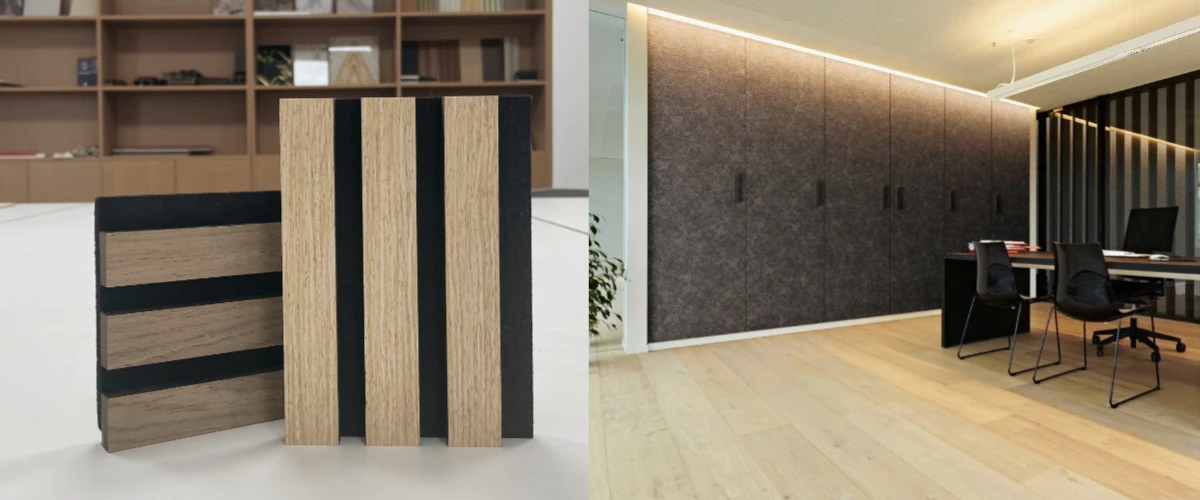
Wood Acoustic Wall Panels
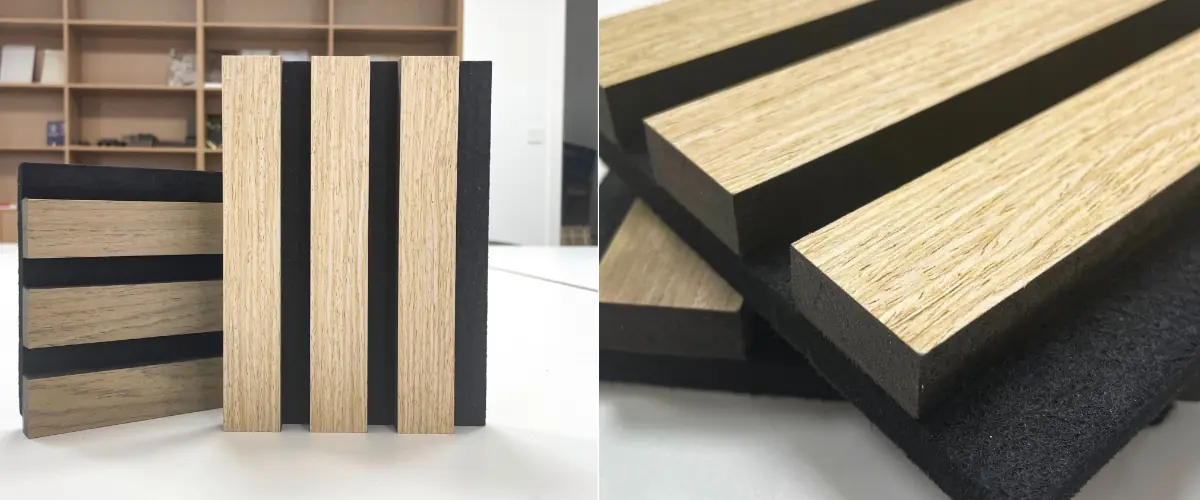
Wood acoustic panels combine natural wood or wood-look finishes with sound-absorbing materials.
A common design consists of decorative wood slats installed over an acoustic backing layer.
These panels are popular in:
- Offices
- Hotels
- Restaurants
- Home theaters
- Conference rooms
- Reception areas
They are especially suitable for projects where acoustic performance and interior design are both important.
Fabric Acoustic Panels
Fabric-covered acoustic panels usually contain a sound-absorbing core covered with decorative fabric.
They are available in different colors and can be used to create a soft and professional appearance.
Acoustic Foam Panels
Acoustic foam uses an open-cell structure to absorb sound.
It is often found in recording studios, podcast rooms, music rooms, and other spaces where acoustic treatment is important.
How to Choose Acoustic Wall Panels
Before buying acoustic wall panels, buyers should consider more than appearance and price.
1. Acoustic Performance
Check the panel’s acoustic performance and sound absorption characteristics.
Depending on the product and testing method, acoustic performance may be described using terms such as NRC (Noise Reduction Coefficient) or sound absorption coefficients.
For commercial projects, always request the manufacturer’s test data when acoustic performance is an important requirement.
2. Panel Material
Consider whether PET, wood, fabric, foam, or another material is suitable for your project.
The material affects appearance, durability, weight, installation, acoustic performance, and cost.
3. Thickness
Panel thickness can affect acoustic performance, especially at lower frequencies.
However, thicker does not automatically mean better for every application. The complete panel construction and installation method should also be considered.
4. Installation Method
Acoustic wall panels can be installed using different methods, including adhesive, clips, battens, frames, or mechanical fixing systems.
The installation method should match the wall structure and the panel design.
6. Appearance
Acoustic products are no longer limited to basic black or gray panels.
Buyers can choose from wood finishes, fabric surfaces, different colors, geometric patterns, slatted designs, and custom shapes.
For commercial projects, appearance can be just as important as acoustic performance.
7. Supplier and Customization
For large projects, it is useful to work with a supplier that can provide customized dimensions, colors, finishes, packaging, and installation solutions.
Buyers should also confirm production capacity, quality control, lead time, and export experience before placing a bulk order.
Are Acoustic Wall Panels Worth Buying?
For rooms with excessive echo, reverberation, or poor speech clarity, acoustic wall panels can be a practical investment.
They are particularly useful when a project needs to improve room acoustics without sacrificing interior design.
However, acoustic panels should be selected according to the actual acoustic problem. Installing decorative panels without considering room size, panel coverage, frequency range, and installation location may not provide the expected result.
For larger commercial or architectural projects, it is better to evaluate the entire acoustic system rather than choosing panels based only on appearance or price.
Final Thoughts
So, what is an acoustic wall panel?
An acoustic wall panel is a sound-absorbing wall treatment designed to reduce unwanted sound reflections, echo, and reverberation inside a room. Depending on the material and construction, acoustic panels can provide a combination of sound absorption, interior decoration, durability, and easy installation.
For buyers, the most important factors are acoustic performance, material, thickness, fire rating, appearance, installation method, and supplier reliability.
If you are purchasing acoustic wall panels for a commercial, hotel, office, restaurant, school, studio, or residential project, choosing the right panel specification is more important than simply choosing the cheapest option.
Looking for Acoustic Wall Panels?
Chili New Materials provides quality acoustic wall panels for commercial and residential projects. Contact us today for product details, customized solutions, and a competitive quotation.