



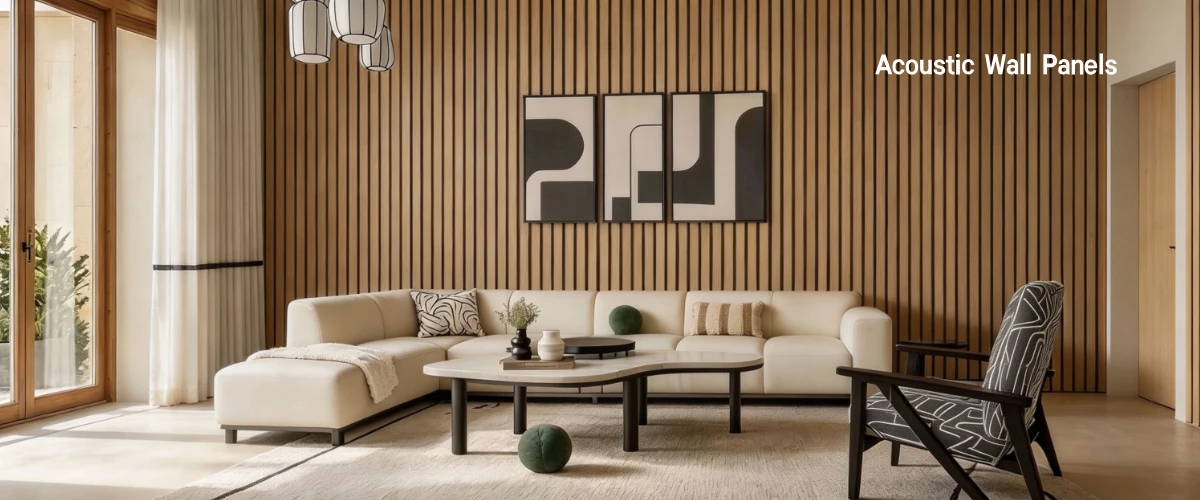
Acoustic Wall Panels are a new type of building material that balances acoustic performance and decorative aesthetics. They trap sound waves, cut reverberation and noise, while delivering great visual appeal. Designers widely deploy these panels for wall and ceiling builds across many space types.
What do sound-absorbing wall panels do, and what advantages can they bring?
In this guide, we cover the main use cases of acoustic panels, explain how they work, and show why more architects, interior designers, contractors and commercial property owners pick these wall materials for their projects.
What Are Acoustic Wall Panels?
Acoustic Wall panels are premium sound-absorbing decorative materials. Their internal porous, fibrous or resonant structures capture sound wave energy. They rely on acoustic impedance matching plus multiple reflection, refraction and sound attenuation to work. The products cut indoor reverberation and noise interference effectively. They also offer eco-friendly properties, fire resistance, thermal insulation, moisture resistance and attractive finishes.
Learn More About Acoustic Panels → What Are Acoustic Wall Panels?
What Are Acoustic Panels Used For?
Designers mainly select acoustic panels to reduce unwanted sound reflections and refine indoor acoustics.
Common use goals include:
Noise reduction and echo control: Porous, fibrous or resonant structures soak up sound waves. This lowers environmental noise (such as equipment hum and outside disturbances) and indoor echo. It improves speech clarity and stops boomy reverberation inside a room.
Acoustic optimization and tuning: In professional settings, the products adjust a space’s reverberation time. They guarantee accurate sound reproduction, prevent distortion, and preserve clarity for recorded or amplified audio.
Space decoration and zoning: Modern sound-absorbing wall decor comes in many textures — geometric folds, smooth curves, grooved surfaces and more — plus diverse color choices. They act as a strong visual feature for wall design. Teams can also use different colors or surface textures to visually split functional zones without building new solid walls.
Acoustic panels do more than simply quiet a room. Their core job is controlling reflected sound and shaping how sound travels inside a space. That makes them especially valuable for rooms with many hard surfaces or areas where people talk frequently.
1. Acoustic Panels for Offices
Modern offices often adopt open layouts with glass partitions, concrete floors, ceilings and other hard surfaces. These materials bounce sound heavily.
Acoustic panels reduce distracting background noise and help people hear speech more clearly.
Common installation locations:
- Open-plan offices
- Private offices
- Meeting rooms
- Conference rooms
- Reception areas
- Coworking spaces
- Training rooms
For example, mounting acoustic panels on selected walls inside a conference room cuts reverberation and makes conversations easier to follow.
For open-plan offices, teams can pair these panels with acoustic ceiling systems, carpets, dividers and other sound-absorbing products to build a well-balanced acoustic environment.
2. Acoustic Panels for Conference Rooms
Conference rooms need clear speech and smooth communication.
Glass walls, large tables, hard floors and other reflective surfaces inside meeting spaces bounce voices around and make conversations hard to follow.
Wall-mounted acoustic panels absorb part of these reflections and boost speech intelligibility.
Good fits include:
- Meeting rooms
- Boardrooms
- Video conference rooms
- Presentation rooms
- Training rooms
For businesses that run frequent video calls, better room acoustics also help microphones and speakers perform at their best.
3. Acoustic Panels for Restaurants and Cafés
Chatting guests, kitchen gear, background music, clinking dishes and customer activity quickly raise noise levels inside restaurants and cafés.
Tile, glass, concrete and metal are hard surfaces that amplify sound reflections and make spaces feel louder.
Acoustic panels control reverberation and create a more pleasant dining atmosphere.
Install them on:
- Dining area walls
- Private dining rooms
- Café interiors
- Bar areas
- Reception spaces
Decorative acoustic panels shine for restaurant builds because they handle acoustic treatment and interior decoration all at once.
4. Acoustic Panels for Hotels
Hotels aim to build comfortable, visually appealing interior environments.
Designers use acoustic panels in:
- Hotel lobbies
- Restaurants
- Conference rooms
- Corridors
- Lounges
- Reception areas
- Event spaces
Within public zones, decorative acoustic panels absorb sound without giving interiors an overly technical look.
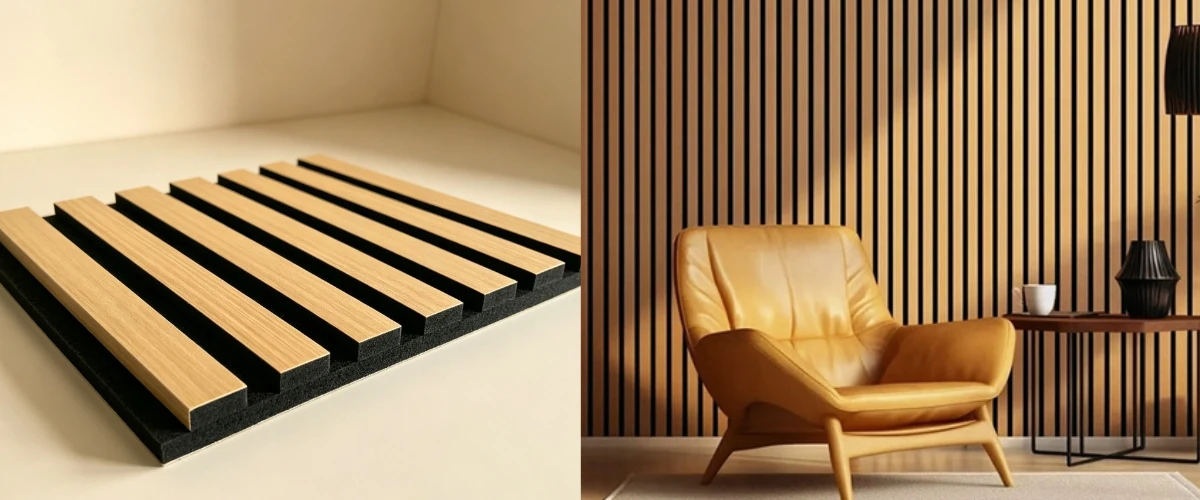
Wood acoustic panels, slatted acoustic panels, and fabric-wrapped versions remain popular for hospitality builds, as they complement many design styles.
5. Acoustic Panels for Schools and Classrooms
Good acoustics carry huge importance for education spaces.
Students need to hear instructors clearly, while teachers communicate without heavy background noise or echo.
Acoustic panels work well in:
- Classrooms
- Lecture halls
- Libraries
- Music rooms
- Training centers
- School cafeterias
Cutting reverberation improves speech clarity and makes learning spaces more comfortable.
For bigger classrooms and lecture halls, builders combine wall acoustic panels with ceiling sound-absorbing products for full-spectrum noise control.
6. Acoustic Panels for Home Theaters
Home theaters and entertainment rooms need tuned acoustics to deliver immersive listening experiences.
Wall acoustic panels manage sound reflections from room surfaces and balance overall room acoustics.
Popular spaces:
- Home theaters
- Media rooms
- Gaming rooms
- Music rooms
- Entertainment rooms
Keep one key point in mind: these wall products focus on sound absorption and acoustic treatment, not full soundproofing.
This distinction matters when picking acoustic products for your project.
7. Professional acoustic spaces
Recording studios, broadcast studios, concert halls, listening rooms, KTV booths and similar venues require high Noise Reduction Coefficient (NRC) ratings. Builders often select fabric-wrapped acoustic panels or premium wooden acoustic panels to deliver top-tier acoustic performance.
8. Acoustic Panels for Theaters and Auditoriums
Sound waves travel long distances and bounce off walls, ceilings and hard surfaces inside large venues, creating strong reverberation.
Acoustic panels control these reflections in:
- Theaters
- Auditoriums
- Performance halls
- Lecture halls
- Event venues
- Community centers
Proper acoustic treatment lets audiences hear speech, music and performances more clearly.
What Are the Benefits of Acoustic Panels?
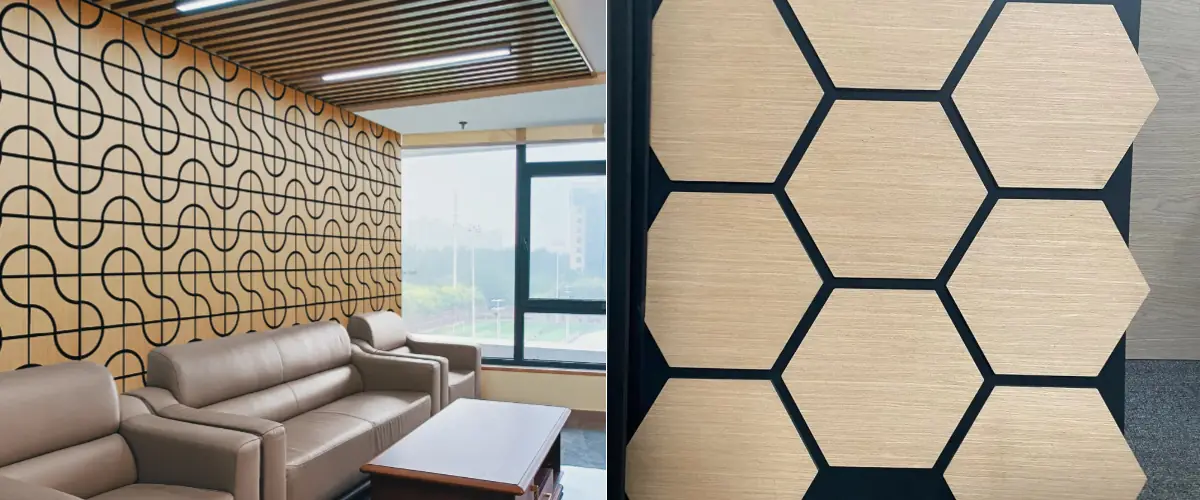
Acoustic panels bring multiple benefits for commercial and residential interior builds.
1. Reduce Echo and Reverberation
One core advantage of acoustic panels is suppressing unwanted sound reflections.
This makes rooms feel less noisy and elevates the overall acoustic environment.
2. Improve Speech Clarity
When teams control excessive reverberation, listeners follow conversations much easier.
This value stands out in:
- Conference rooms
- Classrooms
- Lecture halls
- Restaurants
- Offices
- Meeting spaces
3. Improve Acoustic Comfort
High background noise distracts people and creates discomfort.
Acoustic panels create a balanced indoor sound environment, ideal for workplaces, hospitality sites, education facilities and public buildings.
4. Combine Acoustic Performance with Interior Design
Modern acoustic panels come with a wide range of colors, textures, patterns and surface finishes.
Wood slat acoustic panels, fabric acoustic panels, and decorative PET acoustic panels integrate into overall interior design instead of looking like plain technical noise-control gear.
5. Flexible Installation
Most acoustic panels mount directly onto walls or integrate with other interior systems.
Installation choices vary by product, and include:
- Adhesive installation
- Clips
- Mounting rails
- Screws
- Hanging systems
Choose the right mounting method based on panel structure and wall condition.
6. Suitable for Different Commercial Projects
Acoustic requirements differ room by room. Manufacturers produce acoustic panels in varied sizes, thicknesses, materials and designs.
This makes the products fit small interior renovations and large commercial developments alike.
Acoustic Panels vs. Soundproofing Panels
A frequent question: can acoustic panels fully soundproof a room?
The short answer is usually no.
Acoustic treatment and soundproofing serve different goals.
| Feature | Acoustic Panels | Soundproofing Systems |
|---|---|---|
| Main purpose | Absorb reflected sound | Reduce sound transmission |
| Reduce echo | Yes | Not the primary function |
| Improve speech clarity | Yes | Not the primary function |
| Reduce sound transmission through walls | Limited | Yes |
| Interior decoration | Often | Usually secondary |
| Typical applications | Offices, restaurants, classrooms, studios | Recording rooms, industrial spaces, partitions |
Acoustic panels mainly manage sound inside a room, while soundproofing blocks sound transfer between separate spaces.
Projects needing strong sound isolation pair acoustic panels with properly engineered walls, insulation, doors, ceilings and other soundproofing systems.
Consider Fire and Environmental Requirements
For commercial and public projects, buyers check applicable fire, environmental, and building codes.
Always ask the manufacturer for relevant product documentation and test reports before placing large orders.
Where Should Acoustic Panels Be Installed?
You do not need to cover every wall surface with acoustic panels.
Select installation locations according to the room’s acoustic traits.
Common mounting spots:
- Large empty wall surfaces
- First-reflection points
- Walls opposite speakers
- Areas with strong sound reflections
- Walls surrounding meeting or conversation areas
For large-scale builds, acoustic consultants or professionals assess the room and define the correct quantity and placement of acoustic treatment.
Conclusion
So, what do acoustic panels do?
They primarily absorb reflected sound, cut echo and reverberation, improve speech clarity, and build a more comfortable acoustic environment.
From offices and conference rooms to restaurants, hotels, schools, studios, and theaters, acoustic panels adapt to a broad range of interior applications.
If you source acoustic panels for a commercial project, evaluate acoustic performance, material, thickness, appearance, installation method, fire requirements and project specs before finalizing your selection.
Chili New Materials provides acoustic panel solutions for commercial and interior projects. Contact us for product specifications, customization options, and project support.