




Acoustic wall panels and soundproofing materials are often confused because both are used to improve the acoustic performance of a room. However, their core principles, functions, and applications are completely different.
Acoustic wall panels are primarily designed to absorb sound within a room, reducing echoes, reverberation, and unwanted sound reflections.
Soundproofing, on the other hand, focuses on preventing sound from traveling between different spaces.
Understanding the difference between acoustic wall panels and soundproofing can help you choose the right solution for offices, studios, restaurants, schools, hotels, and other commercial spaces.
What Are Acoustic Wall Panels?
Acoustic wall panels are interior wall treatments designed to absorb sound energy and improve the acoustic environment inside a room.
When sound waves hit hard surfaces such as concrete, glass, tile, or drywall, they can reflect repeatedly around the room. These reflections may create echo and make speech harder to understand.
Acoustic wall panels use sound-absorbing materials and specially designed surfaces to reduce these reflections.
The main purpose of acoustic wall panels is sound absorption, not complete sound blocking.
What Is Soundproofing?
Soundproofing materials (blocking sound from entering or leaving): They mainly rely on high-density, heavy, and solid materials, such as acoustic barriers, damping boards, and concrete. By using the “mass law,” they help prevent sound waves from passing through walls and other structures. Their primary function is to block sound transmission between spaces, addressing problems such as “being able to clearly hear conversations next door” or “outside noise entering the room.”
Common soundproofing methods include:
- Adding mass to walls
- Building double-wall systems
- Using insulation inside wall cavities
- Sealing gaps and cracks
- Installing acoustic doors
- Improving window construction
- Using resilient channels or isolation systems
Soundproofing is therefore more closely related to sound insulation and sound transmission control.
Acoustic Wall Panels vs Soundproofing: Key Difference
The simplest way to understand the difference is:
Acoustic wall panels control sound inside a room, while soundproofing helps prevent sound from moving between rooms.
| Feature | Acoustic Wall Panels | Soundproofing |
|---|---|---|
| Main purpose | Absorb sound | Block sound transmission |
| Primary problem | Echo and reverberation | Noise traveling between spaces |
| Main principle | Sound absorption | Sound isolation |
| Improves room acoustics | Yes | Sometimes |
| Blocks outside noise | Limited | Yes, when properly designed |
| Reduces echo | Yes | Not necessarily |
| Typical installation | Walls or ceilings | Walls, floors, ceilings, doors, windows |
| Common applications | Offices, studios, restaurants | Apartments, studios, industrial spaces |
This distinction is important when selecting an acoustic solution. Installing acoustic wall panels will not automatically make a wall soundproof.
Do Acoustic Wall Panels Soundproof a Room?
No. Acoustic wall panels and soundproofing materials work on fundamentally different physical principles. Simply installing acoustic wall panels on a wall cannot effectively block outside noise from entering a room.
Their primary function is to absorb sound reflections and reduce reverberation. They can make a room sound quieter and more comfortable, but they cannot completely prevent sound transmission. For example, imagine a busy office with hard flooring, glass walls, and an exposed ceiling. Conversations may bounce around the room, creating excessive echoes and reverberation.
Installing acoustic wall panels can absorb some of these reflected sounds, making conversations clearer and reducing the overall harshness of the room’s acoustics.
However, if the main problem is loud noise coming through an adjacent wall, acoustic panels alone may not solve the issue. A properly designed soundproofing system would be a more suitable solution.
What Do Acoustic Wall Panels Do?
Acoustic wall panels can provide several important benefits for interior spaces.
1. Reduce Echo
Hard surfaces reflect sound waves. When there are too many reflections, a room can sound echoey.
Acoustic wall panels absorb part of the sound energy and reduce these reflections.
2. Reduce Reverberation
Long reverberation times can make speech difficult to understand.
Acoustic wall panels help control reverberation, which is particularly useful in:
- Meeting rooms
- Classrooms
- Restaurants
- Lecture halls
- Offices
3. Improve Speech Clarity
When excessive reflections are reduced, spoken words can become easier to understand.
This is especially valuable for conference rooms and open-plan offices where clear communication is important.
4. Improve Acoustic Comfort
A room with excessive noise and reverberation can feel uncomfortable even when the actual sound level is not extremely high.
Acoustic wall panels can create a more controlled and comfortable acoustic environment.
5. Add Interior Design Value
Modern acoustic wall panels are available in different colors, textures, shapes, and finishes.
They can therefore function as both an acoustic treatment and an interior design element.
What Does Soundproofing Do?
Soundproofing focuses on reducing sound transmission.
A properly designed soundproofing system can help reduce noise traveling through:
- Walls
- Ceilings
- Floors
- Doors
- Windows
- Structural connections
Soundproofing usually requires more than simply attaching a material to the surface of a wall.
The effectiveness of a soundproofing system depends on factors such as mass, airtightness, isolation, construction method, and the path through which sound travels.
Comparison of Common Materials
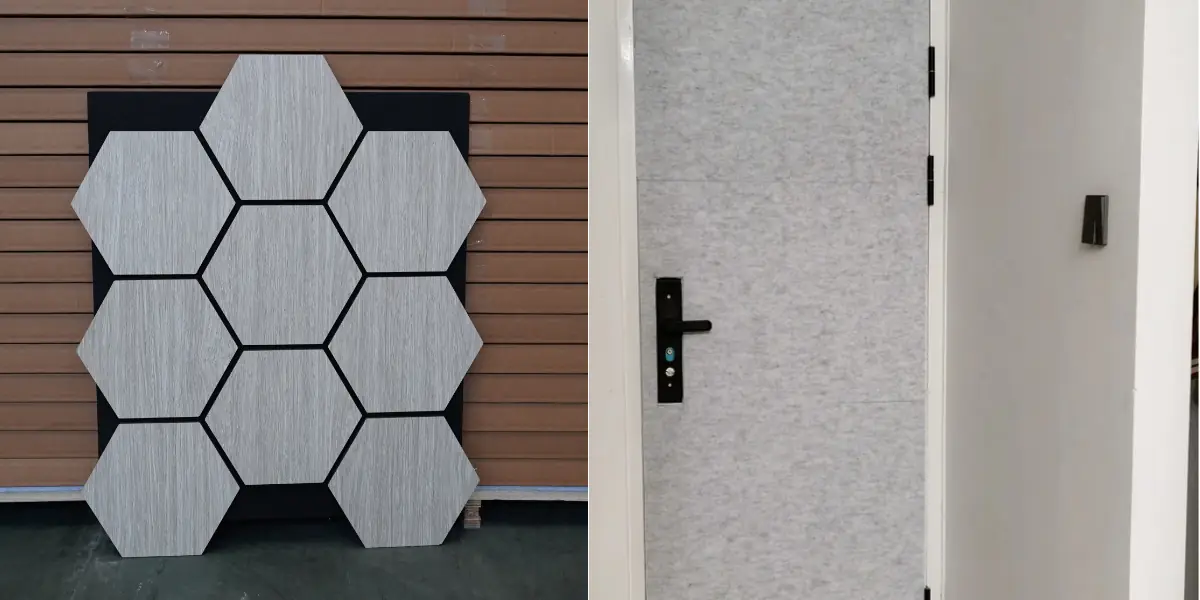
- Sound-absorbing materials: These are generally lightweight, soft, and porous. Common examples include polyester fiber panels, mineral wool, fiberglass, upholstered panels, heavy curtains, and carpets. They are mainly used to improve the acoustic environment inside a room by absorbing sound and reducing reflections and reverberation.
- Soundproofing materials: These are generally heavy, rigid, and dense. Common examples include acoustic barriers, damping composite boards, steel panels, concrete, and professionally designed soundproof doors and windows. They are mainly used to block or reduce the transmission of sound between different spaces.
How to Choose Based on Your Needs
Choose acoustic wall panels: If your home feels empty and voices echo, your music room has excessive background noise, your recording or livestreaming room sounds dull, or conversations are difficult to hear clearly in a meeting room, what you need is sound absorption. Acoustic wall panels address the problem of “poor sound quality inside the room.”
They are particularly suitable for open-plan offices, conference rooms, restaurants, schools, studios, and other indoor spaces.
Choose soundproofing materials: If you are tired of hearing conversations from next door, footsteps from upstairs, or traffic noise from outside—or if you are worried about disturbing your neighbors when singing at home—you need soundproofing. Soundproofing addresses the problem of “sound traveling through walls and other structures.”
Can You Use Acoustic Wall Panels and Soundproofing Together?
Yes. In many projects, acoustic wall panels and soundproofing work best together.
These two solutions address different acoustic problems.
For example, a recording studio may require soundproof construction to prevent external noise from entering the room and prevent studio sound from disturbing surrounding areas.
Inside the studio, acoustic wall panels can then help control reflections and reverberation.
The result is a more complete acoustic solution:
Soundproofing = control sound transmission
Acoustic wall panels = control sound reflections
Using both approaches allows designers to address both external noise and internal room acoustics.
Are Acoustic Wall Panels Worth It?
Acoustic wall panels can be worthwhile when a room has noticeable echo, reverberation, or poor speech clarity.
However, the right solution depends on the specific acoustic problem.
If you want to reduce echo in a conference room, acoustic wall panels may be an effective solution.
If you want to stop your neighbor’s noise from entering your bedroom, you may need a properly designed soundproofing system instead.
Before choosing a product, identify whether your main problem is sound absorption or sound transmission.
How to Choose the Right Acoustic Wall Panels
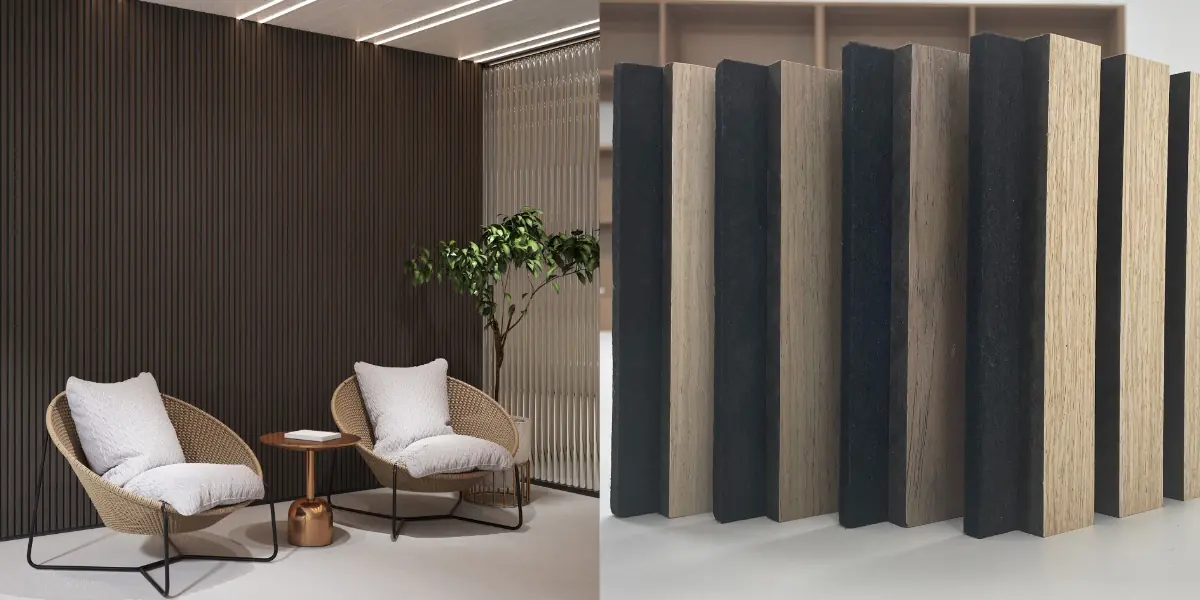
When selecting acoustic wall panels, consider several factors.
Material
Different acoustic panels use different materials and structures. The material affects sound absorption, appearance, durability, and installation requirements.
Thickness
Panel thickness can influence acoustic performance. The appropriate thickness depends on the room and the desired acoustic treatment.
Surface Coverage
A small number of panels may not provide the same result as a properly distributed acoustic treatment system.
Panel placement is important because sound reflections can come from different surfaces.
Installation
Consider whether the panels will be installed directly on walls, suspended, framed, or combined with other acoustic treatments.
Design
For commercial interiors, appearance is also important. Choose acoustic wall panels that complement the overall interior design.
Frequently Asked Questions
Are acoustic wall panels the same as soundproofing?
No. Acoustic wall panels primarily absorb sound inside a room, while soundproofing aims to reduce sound transmission between spaces.
Do acoustic panels block outside noise?
Acoustic panels may improve the acoustic environment inside a room, but they are not normally designed to provide complete sound isolation from outside noise.
Do acoustic wall panels reduce echo?
Yes. One of the main purposes of acoustic wall panels is to absorb reflected sound and reduce echo and reverberation.
Can acoustic panels make a room quieter?
They can make a room feel quieter by reducing reflected sound and reverberation. However, they do not necessarily reduce the amount of sound entering or leaving the room.
Final Thoughts
Acoustic wall panels and soundproofing solve different acoustic problems.
Acoustic wall panels focus on sound absorption, echo reduction, reverberation control, and speech clarity. Soundproofing focuses on reducing sound transmission between spaces.
If you are designing an office, conference room, restaurant, school, studio, hotel, or other commercial interior, first identify the source of the acoustic problem. Then choose an appropriate combination of acoustic treatment and sound isolation.
Looking for acoustic wall panels for your next project? Explore suitable acoustic wall panel solutions from Chili New Materials and choose a design that combines acoustic performance with modern interior aesthetics.
Contact Chili New Materials to discuss your acoustic wall panel requirements and project needs.