



Hotels, restaurants, offices, retail stores, and other commercial spaces are constantly looking for wall materials that combine aesthetic appeal, easy installation, durability, and cost-effectiveness. Traditional natural stone can create a high-end and sophisticated look, but its weight, installation requirements, and transportation costs can make it difficult to use in large-scale interior projects.
For this reason, flexible stone panels are increasingly becoming a preferred choice for hotel and commercial space design, offering an alternative to traditional stone and tiles. Flexible stone wall panels can replicate the natural texture and appearance of real stone while providing greater flexibility and easier installation. They can be used for feature walls, reception areas, corridors, hotel rooms, restaurants, retail stores, and a wide range of other commercial spaces.
So, why are hotels and commercial spaces choosing flexible stone panels? Here are five key reasons.
1. Flexible Stone Panels Create a Natural Stone Appearance
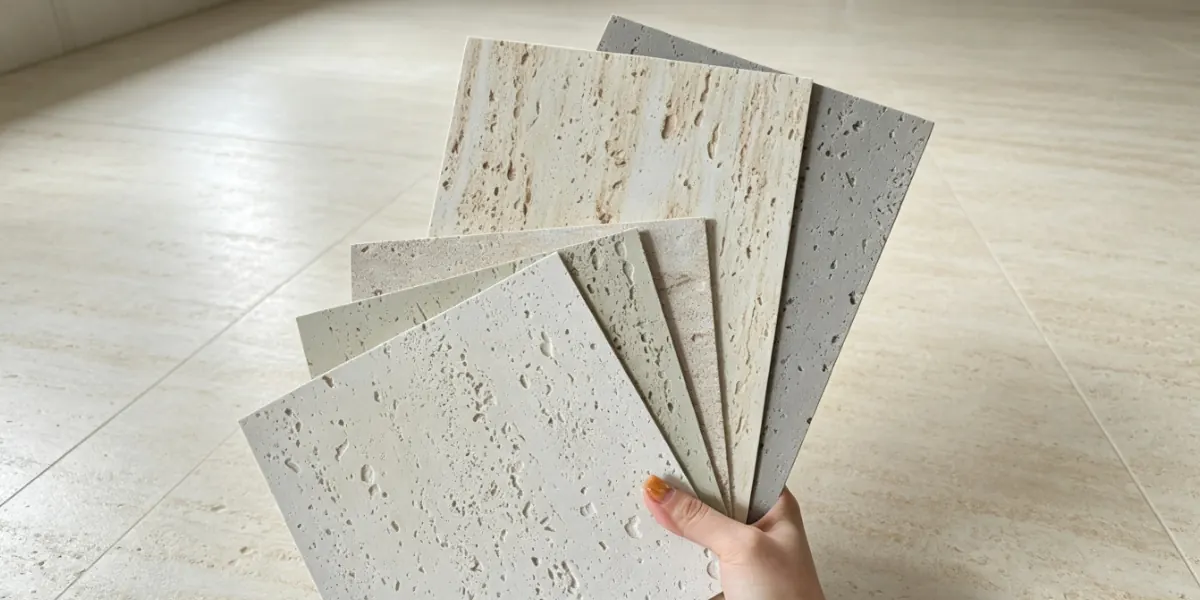
With 3D scanning and molding technology, MCM panels can closely reproduce the textures and colors of various natural materials, including travertine, rammed earth, wood grain, sandstone, woven textures, slate, and marble. Their colors are derived from natural mineral pigments, providing good UV resistance and helping the surface maintain its appearance with less fading over long-term use.
The three-dimensional textures and embossed surface details can create a sophisticated natural atmosphere when enhanced by the lighting in hotel rooms, boutique guesthouses, and high-end restaurants. Compared with heavy and bulky traditional stone, flexible stone wall panels can also replicate the textures, colors, and visual characteristics of natural stone, making them a practical option for premium interior projects.
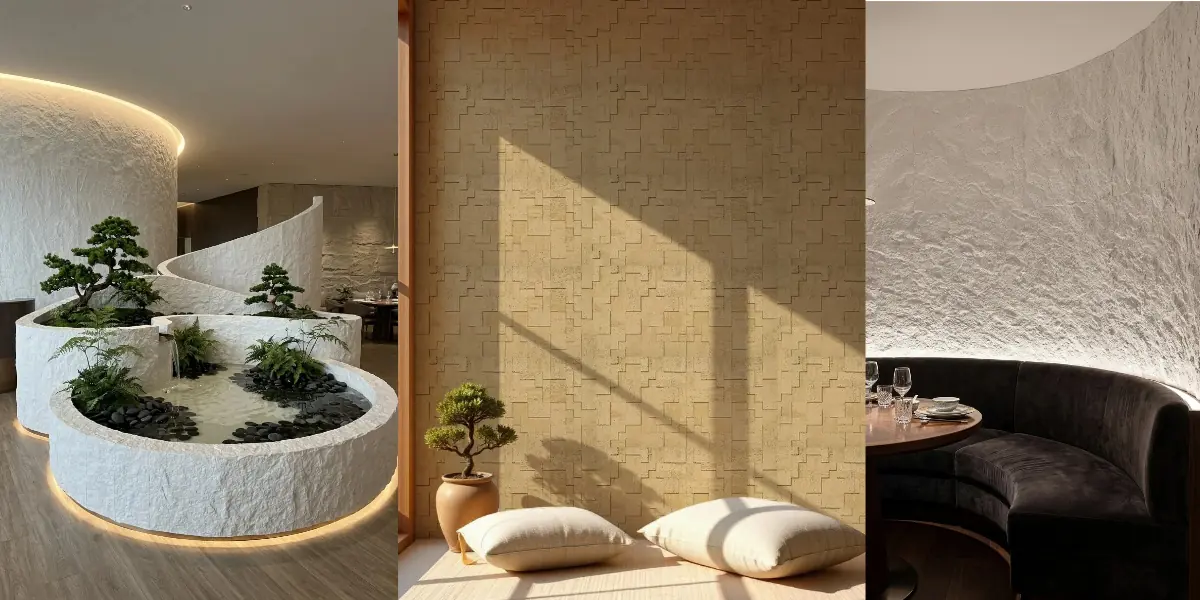
Wall finishes play an important role in shaping the overall atmosphere of hotels and commercial spaces. Stone-look feature walls can add visual depth and texture to an interior and are widely used in hotel reception areas, lobbies, restaurants, retail stores, office reception areas, guest rooms, corridors, commercial showrooms, and themed feature walls.
In a hotel lobby, MCM Panels can be used behind the reception desk to create a strong visual focal point. In restaurants, they can help create a warm and natural atmosphere, while retail stores can use decorative stone-look surfaces to highlight product display areas. With a wide variety of textures, colors, and finishes available, flexible stone panels can complement different interior design styles and help create distinctive commercial spaces.
What Visual Effects Can Flexible Stone Panels Create?
MCM Panels offer a variety of realistic textures and finishes to match different interior styles:
- Travertine – Creates an elegant, premium look for hotel lobbies and reception areas.
- Wood Grain – Adds a warm, natural feeling to guest rooms, restaurants, and cafés.
- Rammed Earth – Creates a relaxed, earthy atmosphere for boutique hotels and homestays.
- Marble Effect – Brings a refined, luxurious look to high-end interiors.
- Fabric & Woven Texture – Adds softness, texture, and a distinctive design character.
With 3D scanning and molding technology, these textures can create realistic flexible stone wall panels with rich three-dimensional effects, giving designers more options for hotels, restaurants, retail stores, and other commercial spaces.
2. Lightweight Design Makes Installation Easier
Traditional natural stone can be relatively heavy, increasing the requirements for transportation, handling, and installation.
MCM Panels are typically only 2–5 mm thick and weigh around 3–8 kg per square meter, making them less than one-tenth the weight of many traditional natural stone materials. This ultra-thin and lightweight design not only significantly reduces transportation and installation loads but can also help reduce the potential risk associated with heavy wall materials falling from elevated areas.
Compared with heavy stone slabs, flexible stone wall panels can help simplify several stages of a project:
Transportation → Handling → Cutting → Installation → Finishing
The panels can be easier for workers to move around the job site, especially when working on upper floors, narrow corridors, or areas with limited access.
For hotel renovations, this flexibility can also reduce disruption to existing spaces. Contractors can install decorative wall panels without dealing with the same handling requirements associated with large and heavy stone slabs.
3. Flexible Stone Panels Work on More Wall Surfaces
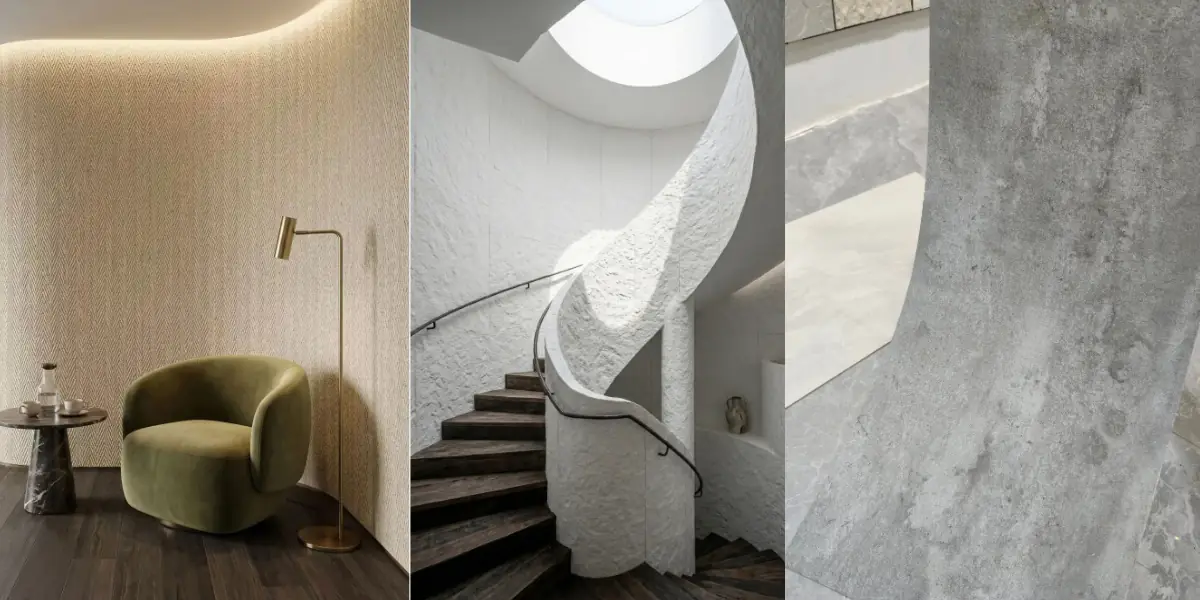
Commercial spaces and hotel lobbies often feature complex architectural elements such as columns, arches, curved walls, and irregular ceilings. Traditional stone and rigid stone slabs cannot bend easily, making on-site cutting, fitting, and edge finishing more difficult.
Flexible stone panels can achieve a minimum bending radius of up to 200 mm, providing excellent flexibility for a wide range of surfaces and architectural details, including flat walls, curved walls, columns, reception desks, decorative partitions, arches, and retail display areas.
Compared with rigid stone materials, flexible stone panels can conform more easily to irregular and curved surfaces, giving designers greater creative freedom. This makes them particularly suitable for hotels, restaurants, and other commercial spaces featuring curved walls, decorative columns, and customized structures.
Instead of assembling multiple small pieces of rigid stone, flexible stone panels can create a more continuous and cohesive surface finish while combining the natural appearance of stone with the design flexibility required by modern architecture.
4. They Can Help Reduce Installation and Project Costs
Cost is another important consideration for commercial construction and renovation projects.
The total cost of a wall covering is not determined only by the material price. Designers and contractors also need to consider transportation, labor, handling, installation time, and material waste.
Because MCM Flexible Stone Panels are lightweight and relatively easy to handle, they can help simplify the installation process.
For large commercial projects, these factors can become significant.
For example, hotels may need thousands of square meters of wall covering across guest rooms, corridors, lobbies, restaurants, and public areas. Using a material that is easier to transport and install can help improve project efficiency.
Flexible stone panels may also be easier to cut and customize for different wall dimensions. This can help contractors deal with corners, openings, columns, and other architectural details.
The actual cost savings will depend on the panel specification, project design, installation method, labor rates, and site conditions. However, the combination of lightweight construction, flexible installation, and easier handling makes these panels worth considering for commercial projects.
5. Flexible Stone Panels Are Suitable for Many Commercial Applications
The versatility of flexible stone panels is another reason they are gaining attention in commercial interior design.
Instead of being limited to one type of project, flexible stone wall panels can be used in many different environments.
Hotels
Hotels can use flexible stone panels for:
- Lobby feature walls
- Reception backgrounds
- Guest room accent walls
- Headboard walls
- Corridors
- Restaurant walls
- Elevator areas
- Decorative columns
The natural stone appearance can help create a sophisticated and comfortable atmosphere for guests.
Restaurants and Cafés
Restaurants often use wall design to establish their brand identity. Stone-effect wall panels can provide a natural, modern, rustic, or luxurious appearance depending on the selected texture and color.
They can be used behind counters, on feature walls, around seating areas, or as part of decorative interior designs.
Retail Stores
Retail environments require attractive displays that support the overall shopping experience. Flexible stone panels can be used for background walls, product display areas, counters, and branded feature sections.
Offices
In offices, flexible stone panels can be used in reception areas, meeting rooms, executive offices, and common areas to create a professional interior environment.
Commercial Showrooms
Showrooms can also use flexible stone panels to create realistic architectural backgrounds without the weight and installation complexity of traditional stone.
What Makes Flexible Stone Panels Different from Traditional Stone?
When choosing wall cladding for a commercial project, it is important to understand the differences between flexible stone panels and traditional stone materials.
| Feature | Flexible Stone Panels | Traditional Stone |
|---|---|---|
| Weight | Lightweight | Relatively heavy |
| Flexibility | Flexible | Rigid |
| Handling | Easier to handle | Requires more handling |
| Installation | Generally easier | Can require specialized installation |
| Curved surfaces | Suitable for some curved designs | More difficult |
| Transportation | Lower handling burden | Higher handling burden |
| Design applications | Interior decorative applications | Interior and exterior applications depending on stone |
| Appearance | Natural stone effect | Natural stone |
The right material depends on the project requirements. Traditional stone may still be appropriate for applications that require specific structural, outdoor, or heavy-duty performance. MCM Flexible Stone Panels are particularly attractive when appearance, lightweight construction, flexibility, and installation efficiency are important.
Learn More About Flexible Plywood: → Are MCM Panels Better Than Stone Veneer?
How to Choose Flexible Stone Panels for a Commercial Project
Before purchasing MCM Panel, buyers should consider several factors.
1. Panel Appearance
Choose a texture and color that match the project’s interior design. Popular styles include slate, sandstone, marble, and other natural stone effects.
2. Panel Size
Larger panels can reduce the number of joints and may create a cleaner visual effect. The appropriate size depends on the wall dimensions and installation method.
3. Flexibility
If the project includes curved walls or columns, confirm that the selected product provides the flexibility required for the intended application.
4. Surface Requirements
The substrate should be clean, dry, stable, and suitable for the recommended adhesive or installation system.
5. Project Environment
For hotels, restaurants, offices, and other commercial environments, buyers should select products according to the expected indoor conditions and the manufacturer’s technical specifications.
Final Thoughts
The growing use of MCM Panels in hotels and commercial spaces is driven by a combination of design flexibility and practical installation advantages.
They can provide a natural stone appearance while offering a lightweight and flexible alternative for many interior wall applications. Their easier handling, adaptability to different surfaces, and wide range of decorative possibilities make them suitable for hotels, restaurants, retail stores, offices, and commercial showrooms.
For architects, interior designers, contractors, and building-material distributors, MCM panels can be an option worth considering when a project requires stone aesthetics without the weight and rigidity of traditional stone.
Chili New Materials offers flexible stone panels in various textures and finishes for hotels, restaurants, retail, and commercial spaces.