




There’s no single best thickness for polyester fiber wood slat acoustic panels. The right choice depends on where you plan to install them, the types of noise you want to reduce, and how you mount the panels. For most homes and commercial interiors, 18–22 mm thick wood slat acoustic panels are a good starting point.
In this guide, we’ll explain how panel thickness affects sound absorption, compare common panel sizes, and help you choose the right option for living rooms, offices, home theaters, and commercial spaces. If you’re new to acoustic treatment, start with our guide to what acoustic wall panels are and how they work.
What Is the Best Thickness for Wood Slat Acoustic Wall Panels?
The best thickness depends on your room’s acoustic requirements, the panel’s construction, and your installation method.
Here is a quick comparison of common wood slat acoustic panel configurations.
| Panel Configuration | Typical Thickness | Best For |
|---|---|---|
| Slim wood slat panels | 12–18 mm | Decorative walls and spaces with limited depth |
| Standard wood slat acoustic panels | 18–22 mm | Living rooms, bedrooms, offices, and reception areas |
| Deeper acoustic slat systems | 25–50 mm overall | Conference rooms and spaces needing greater absorption |
| Wood slat panels with a deeper cavity | 50–100 mm or more overall | Studios, home theaters, and demanding acoustic projects |
These ranges are general selection guidelines, not standardized product categories. Actual dimensions and acoustic performance vary by manufacturer.
For many projects, a 21 mm wood slat acoustic panel offers a good balance between appearance, installation depth, and acoustic functionality. For example, our slat acoustic panels are listed with a standard thickness of 18–22 mm. If you need stronger low-frequency absorption, consider a thicker absorber or a system with additional cavity depth.
How Thick Are Standard Polyester Fiber Wood Slat Acoustic Panels?
Standard polyester fiber wood slat acoustic panels typically come in thicknesses of 9 mm, 12 mm, and 15 mm. although the exact dimensions vary by manufacturer and product design.
How Are Wood Slat Acoustic Panels Constructed?
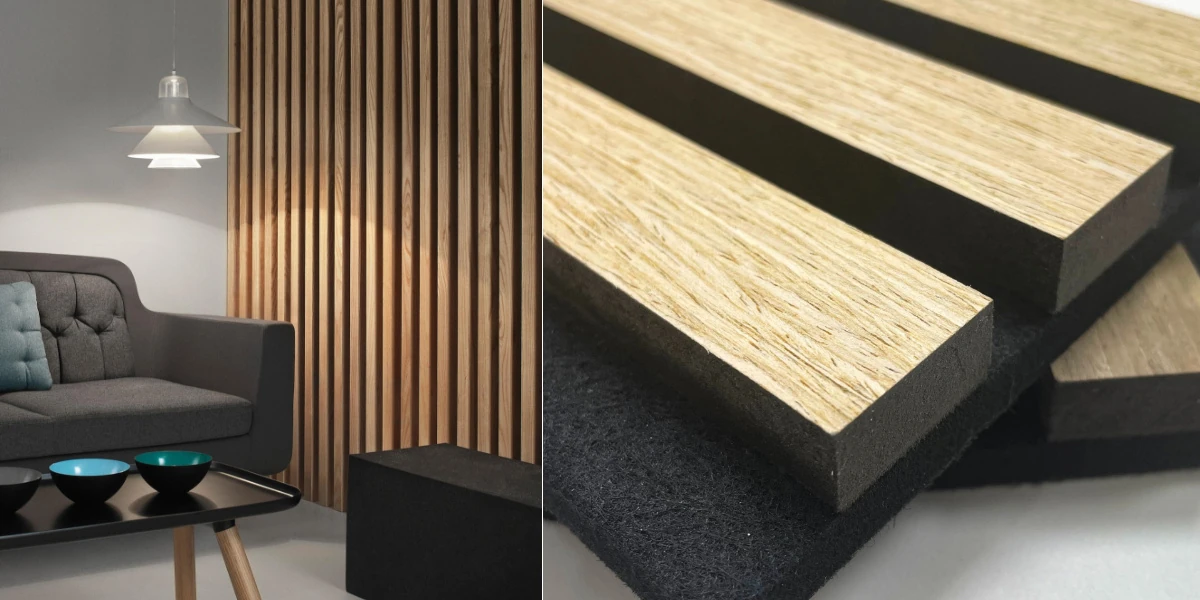
Most polyester fiber wood slat acoustic panels feature three main components: a decorative slat layer, an acoustic backing layer, and a mounting structure or air gap. Each part plays a different role in the panel’s overall performance.
- Decorative slat layer: The front layer usually consists of solid wood slats, bamboo-based materials, or high-density wood-plastic composites. The slats are typically arranged in a regular pattern, adding visual texture while allowing sound to pass through the gaps and reach the acoustic backing.
- Polyester fiber acoustic backing: This layer does most of the sound absorption work. It typically measures 9–15 mm thick and is made from polyester fibers bonded together through a heat-setting process. The porous structure allows sound waves to enter the material, where friction between the fibers converts some of the sound energy into small amounts of heat.
- Backing and air gap: During installation, leaving a 25–50 mm gap between the panel and the wall can improve sound absorption, particularly at lower frequencies. The air space works with the acoustic material to increase absorption across a broader frequency range. If you mount the panels directly onto the wall with adhesive, you won’t get the same benefit from an air gap.
How Does Wood Slat Acoustic Panel Thickness Affect Sound Absorption?
Panel thickness plays an important role in sound absorption, but thicker panels aren’t always better. Thickness mainly affects how well a panel absorbs different sound frequencies, especially lower frequencies. The air gap behind the panel and the type of acoustic backing also make a big difference. Learn more about the broader acoustic wall panel options available for different interior spaces.
How Panel Thickness Affects Different Frequencies
- Thin panels (9–12 mm): These panels are generally better suited to absorbing mid- and high-frequency sounds, such as speech, keyboard clicks, and high-pitched friction noise. Their thinner structure offers less absorption at lower frequencies. They’re a practical choice for home interiors and everyday office spaces where you want to improve room acoustics without adding much depth to the walls.
- Thicker panels (15–25 mm or more): Thicker panels can provide better absorption across a wider frequency range, depending on the backing material and installation method. They’re worth considering for music rooms, home theaters, karaoke rooms, and recording studios, where controlling lower-frequency sound is often more important. However, panel thickness alone doesn’t guarantee a higher Noise Reduction Coefficient (NRC). Always check the product’s acoustic test results before comparing performance.
Standard Panel Sizes and Installation Tips
- Standard panel dimensions: Common panel sizes include 1,220 × 2,420 mm and 1,220 × 2,440 mm, although dimensions vary by manufacturer. Slat width, spacing, and finish can often be customized to suit different interior designs.
- Why the air gap matters: Adding space behind an acoustic panel can improve low-frequency absorption. For example, a 12 mm panel installed with a 50 mm air gap may absorb more low-frequency sound than the same panel mounted directly against a solid wall. For rooms that need better acoustic control, consider leaving a 30–50 mm gap behind the panels. Adding suitable acoustic insulation within that cavity may further improve performance.
- Custom thickness options: If you need a particular slat profile or want to target specific sound frequencies, some manufacturers offer custom thicknesses of 18 mm, 20 mm, 25 mm, or more. Ask the supplier about available specifications and acoustic test data to make sure the panels meet your needs.
What Thickness Is Best for Different Rooms?
The ideal thickness of wood slat acoustic wall panels depends on the room’s size, finishes, and intended use.
- 9 mm (Lightweight Design and Basic Sound Absorption): A good fit for living room feature walls, children’s bedrooms, home offices, and small decorative areas. These panels take up little space and can help absorb everyday mid- and high-frequency sounds, such as voices and TV audio. They’re also a budget-friendly option for simple home improvements.
- 12 mm (A Versatile Choice for Everyday Use): A popular option for both residential and commercial interiors. These panels work well in meeting rooms, offices, standard streaming rooms, and classrooms. They offer a practical balance of sound absorption, installation costs, and appearance. Actual acoustic performance depends on the backing material, air gap, and installation method, so check the manufacturer’s test results for the panel’s NRC rating.
- 15 mm or Thicker (For Rooms With Greater Acoustic Demands): Worth considering for music practice rooms, dedicated home theaters, karaoke rooms, and recording studios. Thicker panels, especially when combined with suitable acoustic backing and an air gap, can improve absorption at lower frequencies and help create a more controlled listening environment.
These recommendations are starting points rather than fixed specifications.
For example, a small bedroom with curtains, carpet, and upholstered furniture may need less acoustic treatment than a large open-plan living room with hard floors and floor-to-ceiling windows.
Before selecting a panel thickness, identify the main acoustic problem and determine how much wall or ceiling coverage the room needs. You can also explore common uses and benefits of acoustic wall panels to help match a panel type to your space.
Conclusion
The best thickness for wood slat acoustic wall panels depends on your room, acoustic goals, panel construction, and installation method. For many residential and commercial interiors, 18–22 mm panels offer a practical balance between decorative appeal and sound absorption. When stronger low-frequency control is required, consider deeper absorbers, a suitable air cavity, or a more comprehensive acoustic treatment system.
Choosing the right panel thickness can make a difference in both interior design and acoustic performance. Whether you’re upgrading a living room, outfitting an office, or planning a home theater,Chili New Materials can help you explore wood slat acoustic panel solutions for your project.