



WPC outdoor decking ranks among the fastest‑selling outdoor construction materials for importers, wholesalers, distributors and construction procurement buyers.
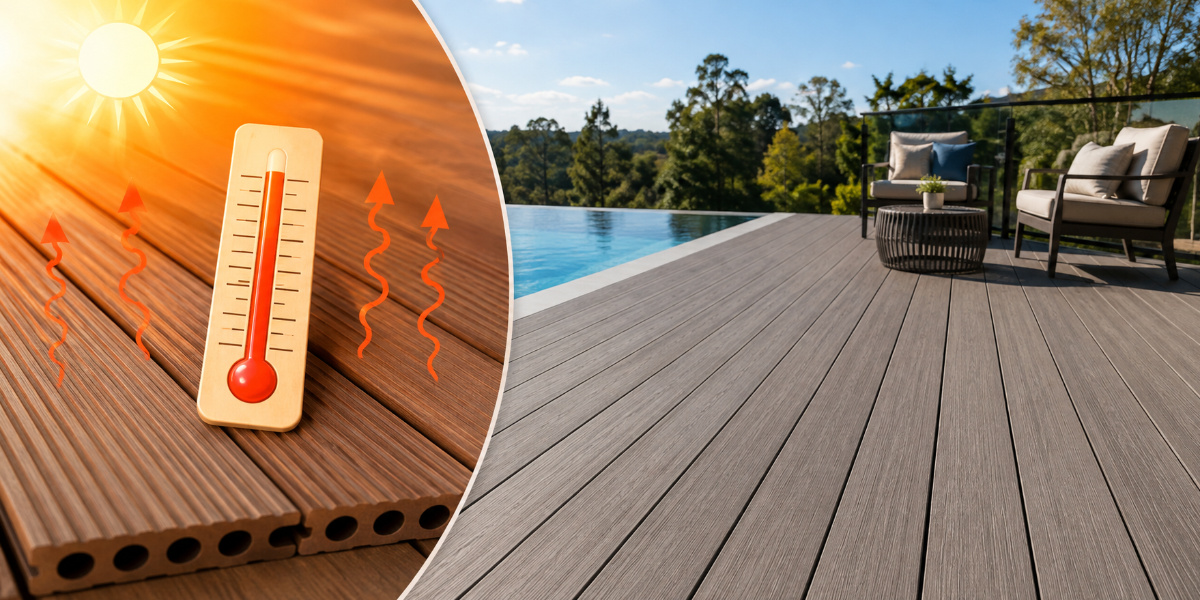
Why Does WPC Decking Get Hot?
WPC (wood‑plastic composite) decking gets produced from wood fibres, recycled plastics and performance‑enhancing additives.
Direct sunshine hits the deck surface and triggers solar‑radiation absorption that lifts up its temperature.
Several key points control absorbed‑heat quantity:
- Decking color
- UV exposure
- Ambient temperature
- Surface finish
- Installation design
- Air circulation beneath the deck
Almost every kind of outdoor‑use building material, from natural timber to stone and WPC, warms up under strong direct sunlight.
Is WPC Decking Hotter Than Wood?
This common assumption does not always hold true.
Lots of purchasers expect composite deck boards to run far hotter than timber. Actual on‑site heating performance, nevertheless, mostly hinges on detailed product specifications.
| Material | Heat Performance | Maintenance | Durability |
|---|---|---|---|
| Light-colored WPC | Moderate | Very Low | Excellent |
| Dark-colored WPC | Higher | Very Low | Excellent |
| Natural Wood | Moderate | High | Moderate |
| PVC Decking | Moderate to High | Low | Excellent |
| Concrete | High | Low | Excellent |
Pick pale‑toned deck panels to achieve cooler surface temperatures. Deep‑shaded material soaks up extra solar heat regardless of composite or PVC raw‑material makeup.
One standout benefit drives WPC decking ahead of solid‑wood flooring for global buyers: minimal‑upkeep properties. Once moisture evaporates off the boards, users never encounter timber‑related troubles such as surface splinters and colour fading.
Factors That Affect WPC Decking Temperature
1. Decking Color
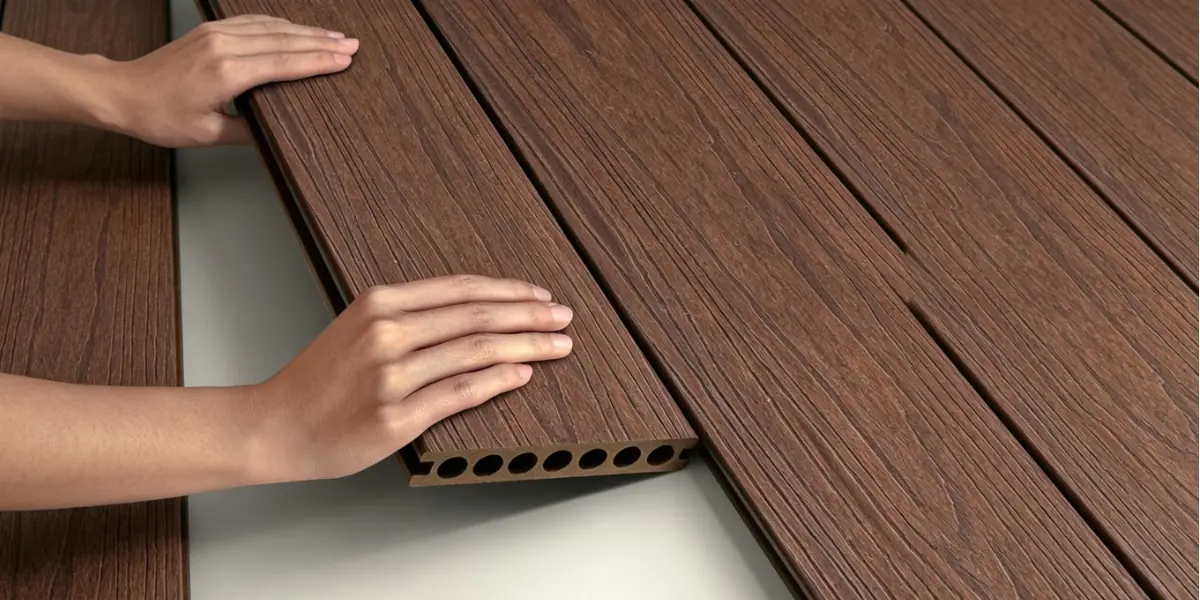
Board colour sits as the top‑ranked variable shaping surface‑heating levels. Deep‑toned decking traps sunshine the same way black clothing retains summer‑time warmth.
Light Colors (Cooler)
- Light Grey
- Sand
- Beige
- Ash
- Oak
- Ivory
Sunlight bounces off these pale shades and keeps deck surfaces pleasantly cool.
Dark Colors (Warmer)
- Walnut
- Coffee
- Chocolate
- Charcoal
- Black
Plenty of solar energy gets absorbed by dark boards during peak sunshine hours and raises surface temperature.
Importer Tip:
Shoppers based within the Middle East, Southern Europe, Australia and tropical zones generally favour light‑toned decking selections.
2. Climate Conditions
Local weather conditions create big gaps in deck‑surface temperatures.
Take these well‑known market‑area examples:
- Northern Europe → Lower surface temperatures
- Canada → Comfortable during most seasons
- Middle East → Higher temperatures in summer
- Southeast Asia → High temperatures with humidity
- Australia → Strong UV exposure
Market research for your target sales region guides proper product‑range decisions.
3. Installation Environment
Direct‑sunshine roof terraces grow warmer than sheltered shaded patios. Sun‑shade canopies deliver practical overhead shelter against harsh rays. Such overhead shelters greatly cut solar heating effects on WPC decking and maintain cooler board surfaces.
Common installation scenarios include:
- Rooftop terraces
- Pool surrounds
- Hotel gardens
- Beach resorts
- Public parks
Pergolas, mature trees and retractable awnings successfully bring down temperatures for outdoor deck projects.
4. Airflow Under the Deck
Cool deck surfaces heavily rely on adequate bottom‑side ventilation.
Every expert‑completed installation incorporates these core specifications:
- Recommended joist spacing
- Expansion gaps
- Elevated subframe systems
- Adequate drainage
Leave clearance gaps underneath and all around your installed deck. Well‑ventilated WPC deck panels enable smooth bottom‑side air circulation.
Choosing WPC Decking for Hot Climate Projects
Buyers serving warm‑zone and tropical‑area clients must select suitable technical deck‑board parameters.
Recommended Features
Light-colored surface
Co-extrusion (capped) technology
UV-resistant protective layer
High-density composite core
Anti-slip embossed texture
Low water absorption
All these specifications slow down heat accumulation while preserving outstanding outdoor weather resistance.
Co-Extrusion WPC Decking: A Better Choice
A tough outer polymer shell wraps around the composite core inside modern capped co‑extrusion WPC decking.
Compared against conventional WPC panels, capped decking supplies these major upgrades:
- Better UV resistance
- Improved color stability
- Higher stain resistance
- Easier cleaning
- Longer service life
- Better weather performance
No outdoor decking material stays fully cool under direct sunlight. Even so, premium capped decking holds steady surface temperatures and copes far better with harsh outdoor surroundings.
Why Importers Prefer WPC Decking
Traditional timber‑related headaches get solved with composite decking, therefore worldwide market demand keeps climbing upwards.
Lower Maintenance
Zero painting, staining or surface sealing becomes necessary.
Longer Service Life
Correct installation allows premium‑grade boards to last between 20–30 years.
Stable Supply
Hardwood lumber lacks the consistent sizing and dependable manufacturing capacity found within WPC decking supplies.
Eco-Friendly
Recycled plastic and recovered wood fibres serve as raw materials for many factories and help projects hit sustainability benchmarks.
Easy Export
WPC decking gets exported widely to fit many project‑type requirements:
- Residential housing
- Commercial developments
- Public infrastructure
- Landscape projects
- Hotels and resorts
- Swimming pools
- Marina walkways
What Buyers Should Ask Their Supplier
Several key technical points deserve confirmation from professional purchasers before large‑scale ordering.
Product Specifications
- Dimensions
- Thickness
- Hollow or solid profile
- Surface texture
- Color options
- Weight
Performance
- UV resistance
- Water absorption
- Anti-slip rating
- Fire rating
- Weather resistance
- Thermal stability
Quality Assurance
- ISO certification
- CE certification
- FSC (if applicable)
- SGS testing reports
- Warranty period
Export Services
Trusted manufacturing partners also deliver these supporting services:
- OEM & ODM support
- Custom colors
- Private label packaging
- Container loading optimization
- Export documentation
- Fast production lead times
Which Markets Prefer Light-Colored WPC Decking?
Strong solar radiation pushes light‑toned decking into rising popularity among sun‑intense territories.
Major overseas export‑target markets include:
- Middle East
- Australia
- Southern Europe
- Southeast Asia
- Caribbean
- South America
- Southern United States
Foot‑friendly cool surfaces plus attractive appearances rank high on buyer priority lists for these sunny‑climate zones.
Why Choose Chili New Materials as Your WPC Decking Supplier?
Global‑scale premium WPC decking solutions get supplied by Chili New Materials, serving overseas importers, distributors, wholesalers and construction‑site teams.
Our complete range of competitive strengths covers:
- OEM & ODM manufacturing
- Wide range of colors and finishes
- Solid and hollow decking profiles
- UV-resistant co-extrusion technology
- Strict quality control
- Competitive factory pricing
- Fast global shipping
- Professional export support
- Custom packaging and branding
No matter your project category from residential builds and commercial landscaping up to large‑scale infrastructure, our seasoned team matches suitable WPC decking solutions for your local market.
Conclusion
Does WPC decking get hot? Yes—but it performs similarly to most outdoor building materials.
Four primary aspects (color, sunlight exposure, climate, installation design) govern deck‑board temperatures, rather than the composite material itself.
Hot‑region project buyers and importers gain comfortable walking surfaces by selecting pale‑toned, UV‑proof co‑extruded WPC decking, all while retaining great durability and low‑maintenance perks.
Growing worldwide demand for sustainable outdoor building materials makes top‑tier WPC decking a wise investment for distributors, contractors, architects and property developers searching for long‑lived dependable building supplies.