


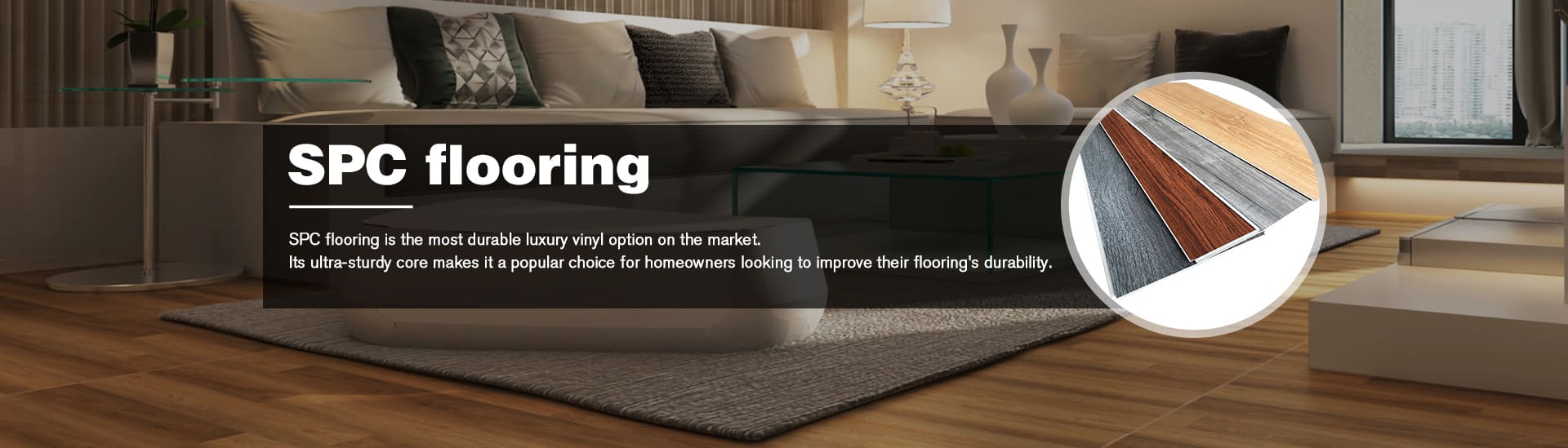

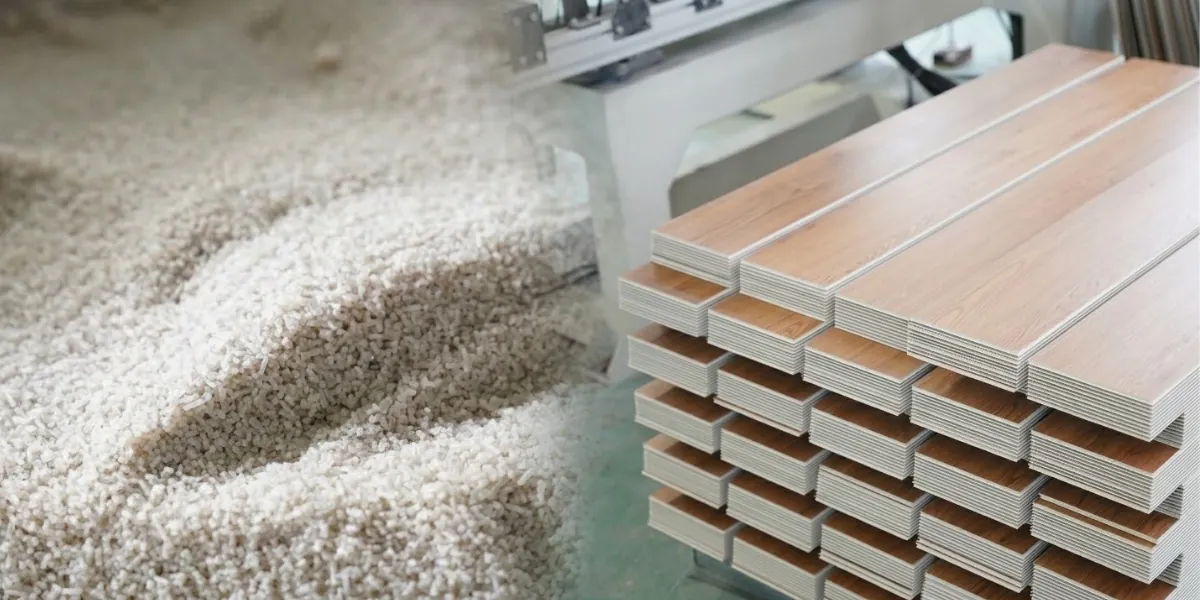
SPC flooring has become a popular choice for residential, commercial, and hospitality projects because of its dimensional stability, water resistance, durability, and realistic wood or stone appearance. But how do manufacturers actually make SPC flooring?
The SPC flooring manufacturing process involves several carefully controlled stages, from selecting raw materials and preparing the SPC compound to extrusion, calendering, printing, UV coating, cutting, and quality inspection.
Understanding how manufacturers produce SPC flooring can help importers, distributors, contractors, and project buyers evaluate product quality and choose the right flooring for their applications.
What Is SPC Flooring?
SPC stands for Stone Plastic Composite or Stone Polymer Composite. Manufacturers primarily produce this rigid-core flooring material from PVC resin, calcium carbonate, and processing additives.
If you want to learn more about the material itself, see our guide to what SPC flooring is and why it is so popular.
A typical SPC flooring structure includes several layers:
- UV coating: This layer provides additional surface protection and improves wear resistance.
- Wear layer: This transparent layer protects the decorative surface from scratches, stains, and daily wear.
- Decorative film: This layer creates realistic wood, stone, marble, or other visual patterns.
- SPC core: This rigid core provides structural strength, rigidity, and dimensional stability.
- Underlayment: Manufacturers may attach an optional IXPE or EVA layer to improve sound absorption and installation comfort.
Manufacturers can adjust the exact structure and formulation according to product specifications and application requirements.
For buyers looking for different SPC flooring designs and specifications, you can also explore our SPC flooring products.
1. Raw Material Proportioning and Mixing
The production process starts with precise material proportioning. Manufacturers typically use calcium carbonate powder at approximately 60%–70% and PVC resin powder at about 30%–40%. They also add environmentally friendly calcium-zinc stabilizers (lead-free) and color pigments when necessary.
Manufacturers then feed these raw materials into a high-speed hot mixer and blend them thoroughly. Uniform mixing distributes every component evenly throughout the compound, which helps prevent cracking, color differences, and other quality problems in the finished flooring.
2. SPC Core Extrusion
The production team feeds the blended raw materials into a high-temperature extruder. The extruder plasticizes the compound at 180°C–200°C and continuously pushes it through a specially designed die to form a large, high-density SPC core sheet.
The die determines the required width and thickness of the continuous sheet. During extrusion, manufacturers carefully control the process because it directly affects the thickness, density, flatness, and dimensional stability of the SPC core.
After the material leaves the die, cooling equipment gradually lowers its temperature and stabilizes the sheet.
3. Calendering and Sheet Forming
Many SPC production lines use calendering or similar sheet-forming equipment to further control the thickness and surface quality of the SPC core.
The material passes through a series of rollers, which shape it into a smooth and uniform sheet.
Precise control at this stage helps manufacturers minimize:
- Thickness variations
- Surface unevenness
- Deformation caused by internal stress
- Dimensional changes
A stable SPC core provides a reliable foundation for the next stages, including the application of the decorative layer and protective wear layer.
4. Applying the Decorative Film
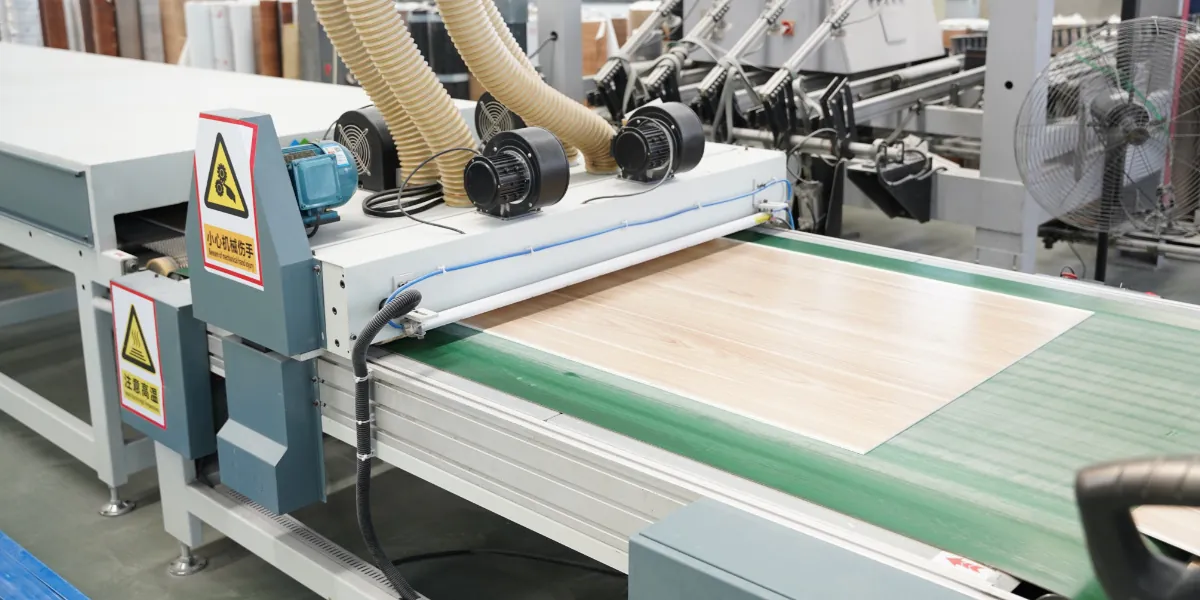
Next, manufacturers laminate the decorative film, which creates wood-grain or stone-look patterns, together with the wear layer, typically made from transparent PVC or polyurethane. A four-roll hot-pressing process uses heat and pressure to bond these layers tightly to the SPC core, helping prevent peeling and delamination.
During this process, the production line must align the decorative film accurately with the SPC core. Precise alignment helps maintain a consistent appearance across the finished flooring planks.
For more information about available design options, see our comparison of wood-look SPC flooring and stone-look SPC flooring.
5. Adding the Wear Layer
Manufacturers add a transparent wear layer above the decorative film to protect the printed design from daily wear, scratches, stains, and other surface damage.
Wear-layer thickness plays an important role when buyers select SPC flooring. Different projects require different wear-layer specifications depending on expected foot traffic.
When comparing SPC flooring products, buyers should consider both the overall flooring thickness and the wear-layer specification.
For a more detailed explanation, read our guide to the best thickness for SPC flooring.
6. UV Coating Curing and Surface Texture Treatment
To improve wear resistance, scratch resistance, and stain resistance, manufacturers send the panels through a UV coating line. The coating line applies an even UV layer to the surface and rapidly cures it under ultraviolet light, creating a dense protective layer.
For some premium products, manufacturers also add synchronized embossed textures or beveled-edge UV coating at this stage. These treatments recreate the natural texture and feel of real wood while helping reduce edge chipping and surface damage.
7. Cutting and Profile Formation
After the SPC board reaches the required stability, the production line cuts it into individual flooring planks or tiles.
Automated cutting equipment controls the dimensions of each piece to maintain consistent length, width, and thickness.
For click-lock SPC flooring, specialized machines then process the edges to create the required locking profile.
Manufacturers use different click-system designs to connect the planks without traditional adhesives.
If you are also preparing SPC flooring for installation projects, see our guide on what to know before installing SPC flooring.
8. Adding the Underlayment and Conditioning
For products that require enhanced underfoot comfort and sound insulation, manufacturers automatically laminate an underlayment to the back of the flooring planks.
Common underlayment materials include IXPE and EVA.
After production, the finished panels enter a temperature-controlled conditioning room for 2–3 days. Stable environmental conditions allow the panels to gradually release internal stresses and improve their dimensional stability.
This conditioning process helps the flooring perform more consistently under different climatic conditions and reduces the risk of warping or deformation.
9. Quality Control and Packaging
Before shipment, quality-control teams inspect every batch of SPC flooring through machine testing and manual inspection. Key checks include formaldehyde emissions, wear resistance, color consistency, dimensional accuracy, and click-lock performance.
Quality-control teams typically keep dimensional tolerances within 0.1 mm to support proper installation.
For export products, manufacturers pay particular attention to consistent quality and dimensional stability because long-distance transportation can expose flooring to different temperature and humidity conditions.
After inspection, packaging equipment automatically places qualified flooring into cartons, labels the packages, and adds corner guards and other protective materials. Workers then stack the cartons on pallets to reduce damage during handling.
For international shipments, manufacturers also optimize carton sizes and pallet arrangements to maximize container space and reduce logistics costs.
What Determines SPC Flooring Quality?
The quality of SPC flooring does not depend on one factor alone. Raw materials, formulation, production equipment, manufacturing controls, and quality inspection all influence the final product.
When sourcing SPC flooring from a manufacturer, buyers should pay attention to:
1. Core Formulation
A stable formulation helps manufacturers achieve consistent density, rigidity, and dimensional stability.
2. Thickness and Wear Layer
The overall thickness and wear-layer specification should match the intended application and expected foot traffic.
3. Decorative Quality
High-resolution printing and accurate film alignment help manufacturers create realistic wood and stone appearances.
4. Locking System
A precisely manufactured click profile makes installation easier and helps reduce gaps or uneven joints.
5. Dimensional Stability
High-quality SPC flooring should maintain stable dimensions under normal environmental changes.
6. Quality Control
Consistent inspection and batch control help manufacturers maintain stable quality, especially for large commercial and international orders.
For a broader overview of the advantages and limitations buyers should consider, read SPC Flooring Pros and Cons: What Buyers Need to Know.
How to Choose an SPC Flooring Manufacturer
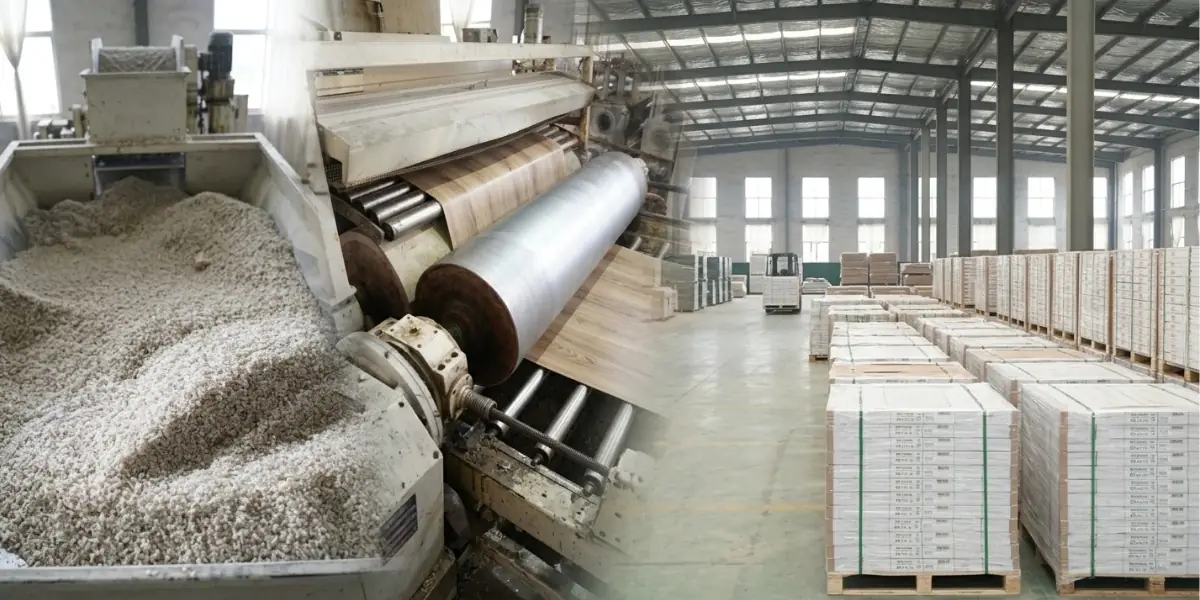
Choosing the right supplier is just as important as choosing the right product.
A professional SPC flooring manufacturer should provide clear information about raw materials, product structure, dimensions, wear-layer specifications, locking systems, quality-control procedures, packaging, and production capacity.
For large B2B orders, buyers should also evaluate:
- Factory production capacity
- OEM and ODM capabilities
- Product customization
- Quality inspection procedures
- Certifications and test reports
- Sample availability
- Lead time
- Packaging options
- Container loading
- Export experience
A factory with stable production and strong quality-control procedures can help distributors and project buyers maintain consistent product quality across multiple orders.
You can learn more about our production capabilities and company background on the Chili New Materials About Us page.
Conclusion
The SPC flooring manufacturing process involves multiple production stages that transform PVC resin, calcium carbonate, and other additives into durable rigid-core flooring.
From raw material preparation and mixing to extrusion, decorative film application, wear-layer protection, UV coating, embossing, cutting, and final inspection, every stage contributes to the quality and performance of the finished product.
For buyers, understanding the manufacturing process makes it easier to compare SPC flooring suppliers and identify products that match specific residential or commercial requirements.
If you are looking for reliable SPC flooring for wholesale, distribution, or construction projects, explore our SPC flooring solutions or contact Chili New Materials to discuss your project requirements, product specifications, and OEM/ODM options.