



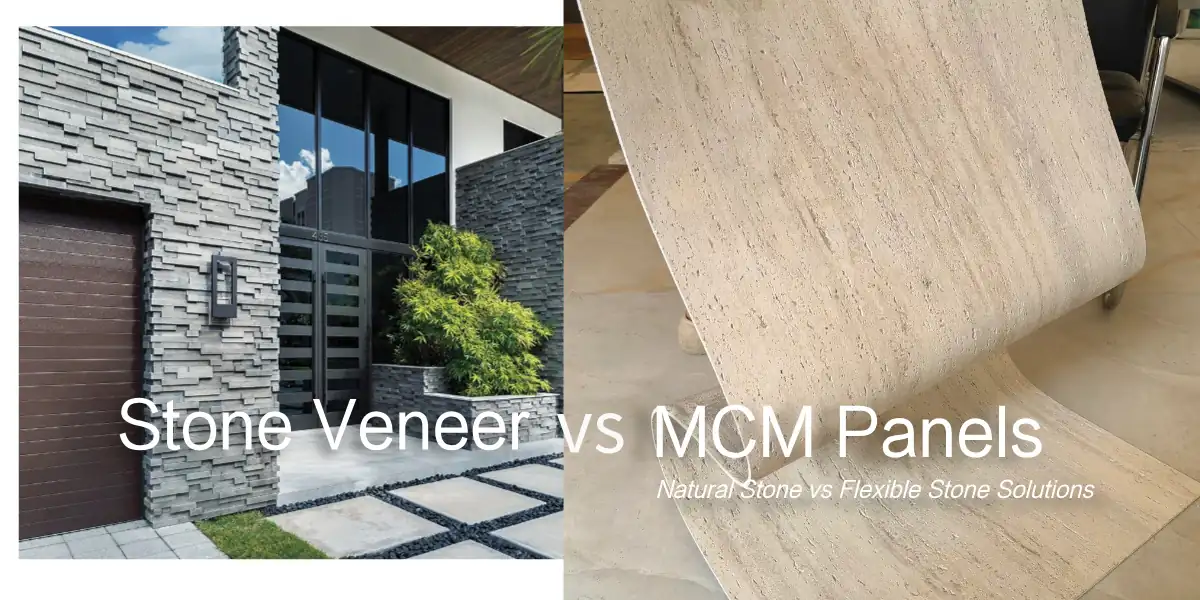
When choosing an exterior or interior wall finish, two popular options often come up: MCM panels and stone veneer. Both can create the appearance of natural stone, but they differ significantly in weight, flexibility, installation, durability, and overall cost.
So, are MCM panels better than stone veneer?
The answer depends on your project. If you prioritize lightweight construction, fast installation, and modern performance, this mineral cladding is often the better choice. However, if you prefer the authentic texture and traditional feel of natural stone, stone veneer may be worth considering.
In this guide, we’ll compare the two materials in detail to help you make the right decision.
What Are MCM Panels?
MCM (Modified Clay Material) panels are an innovative decorative wall material made primarily from modified inorganic mineral powders, natural stone powder, polymers, and other environmentally friendly additives.
Unlike traditional stone, these modified clay slabs are:
- Lightweight
- Flexible
- Thin
- Weather-resistant
- Easy to install
They are manufactured using advanced molding technology to replicate the appearance of granite, marble, sandstone, travertine, slate, brick, and other natural materials.
Today, this flexible wall cladding is widely used for:
- Exterior building facades
- Interior feature walls
- Commercial buildings
- Hotels
- Villas
- Renovation projects
- High-rise buildings
What Is Stone Veneer?
Stone veneer is a decorative covering that mimics natural stone.
It comes in two main types:
- Natural stone veneer (thin-cut real stone)
- Manufactured stone veneer (cement-based artificial stone)
Stone veneer provides the authentic appearance of masonry while being thinner than full-depth stone blocks.
It is commonly installed on:
- Exterior walls
- Fireplaces
- Columns
- Garden walls
- Entryways
- Accent walls
MCM Panels vs Stone Veneer
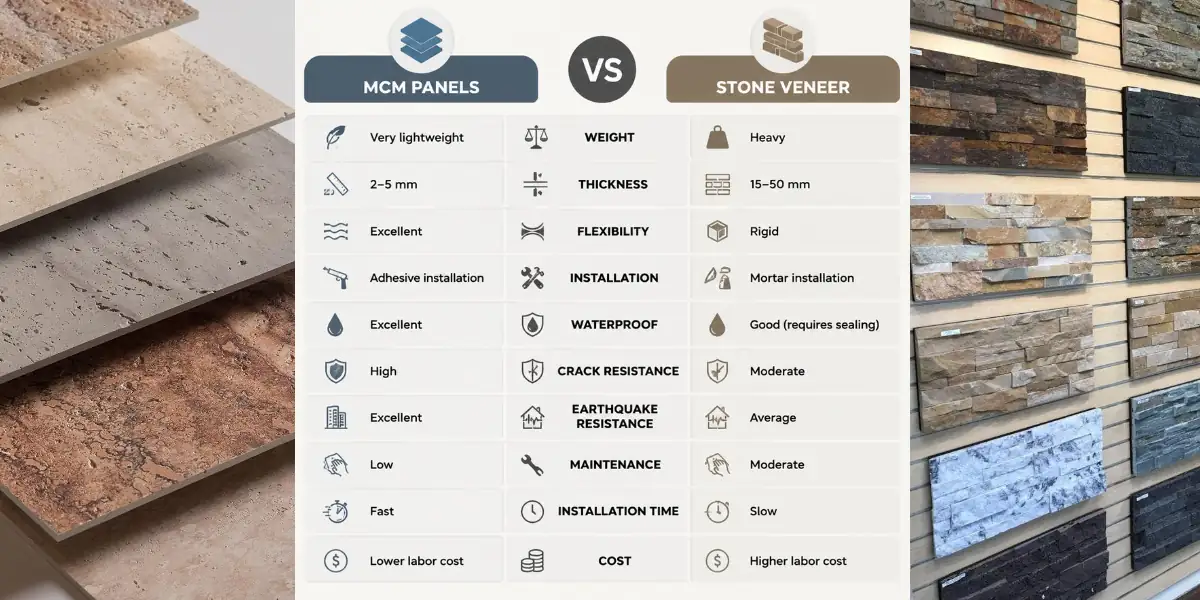
| Feature | MCM Panels | Stone Veneer |
|---|---|---|
| Weight | Very lightweight | Heavy |
| Thickness | 2–5 mm | 15–50 mm |
| Flexibility | Excellent | Rigid |
| Installation | Adhesive installation | Mortar installation |
| Waterproof | Excellent | Good (requires sealing) |
| Crack Resistance | High | Moderate |
| Earthquake Resistance | Excellent | Average |
| Maintenance | Low | Moderate |
| Installation Time | Fast | Slow |
| Cost | Lower labor cost | Higher labor cost |
1. Weight
One of the biggest differences is weight.
MCM Panels
These mineral slabs are extremely lightweight, usually weighing only 3–6 kg/m², depending on the design.
Benefits include:
- Reduced structural load
- Easier transportation
- Lower installation costs
- Suitable for high-rise buildings
Stone Veneer
Natural stone veneer is much heavier.
Typical weight:
- 35–75 kg/m²
This extra weight often requires:
- Stronger wall structures
- Mechanical anchors
- More labor during installation
Winner:MCM Panels
2. Installation
MCM Panels
Installation for this decorative slab is straightforward.
Most modified clay wall cladding is simply:
- Measured
- Cut with basic tools
- Bonded using special adhesive
No mortar is required.
This means:
- Faster installation
- Less mess
- Lower labor costs
- Easier replacement
Stone Veneer
Stone veneer installation usually involves:
- Surface preparation
- Waterproof membrane
- Metal lath (sometimes)
- Mortar application
- Grouting
- Sealing
Installation requires experienced masons and takes considerably longer.
Winner: MCM Panels
3. Flexibility
This lightweight mineral cladding stands out in flexibility.
Because it can bend, it can wrap around:
- Curved walls
- Columns
- Arches
- Irregular building shapes
Stone veneer cannot bend and usually requires cutting into many small pieces.
Winner: MCM Panels
4. Appearance
MCM Panels
Modern manufacturing technology can accurately reproduce:
- Granite
- Marble
- Limestone
- Slate
- Sandstone
- Travertine
- Brick
- Wood textures
Many products are almost indistinguishable from natural stone from a normal viewing distance.
Stone Veneer
Natural stone veneer offers genuine stone textures and unique color variations.
Every piece is naturally different.
Some architects still prefer authentic stone for luxury projects.
Winner: Tie
- Authentic appearance → Stone Veneer
- Wide design options → MCM Panels
5. Durability
MCM Panels
High-quality modified clay slabs offer:
- UV resistance
- Waterproof performance
- Freeze-thaw resistance
- Fade resistance
- Crack resistance
Service life can exceed 20 years with proper installation.
Stone Veneer
Natural stone is also highly durable but may experience:
- Mortar cracking
- Water penetration
- Efflorescence
- Loose stones over time
Manufactured stone veneer may require additional maintenance.
Winner: Slight Advantage: MCM Panels
6. Maintenance
MCM Panels
Maintenance for this mineral cladding is simple.
Usually only requires:
- Water
- Mild detergent
- Soft cloth
No sealing is needed.
Stone Veneer
Stone veneer often requires:
- Regular cleaning
- Resealing
- Repairing mortar joints
- Removing moss or stains
Winner: MCM Panels
7. Cost
Many people assume MCM panels are more expensive.
In reality, the overall project cost is often lower.
MCM Panel Costs
Lower expenses include:
- Transportation
- Labor
- Structural reinforcement
- Installation time
- Maintenance
Stone Veneer Costs
Higher expenses come from:
- Heavy material transportation
- Skilled labor
- Mortar materials
- Longer installation
- Structural support
Winner: MCM Panels
8. Environmental Impact
MCM panels are considered an environmentally friendly wall material because they:
- Use less raw stone
- Consume less energy during transportation due to their lightweight design
- Produce less construction waste
- Generate lower carbon emissions during installation
Natural stone requires quarrying, cutting, and transporting heavy materials, resulting in a larger environmental footprint.
Winner: MCM Panels
Best Applications for MCM Panels
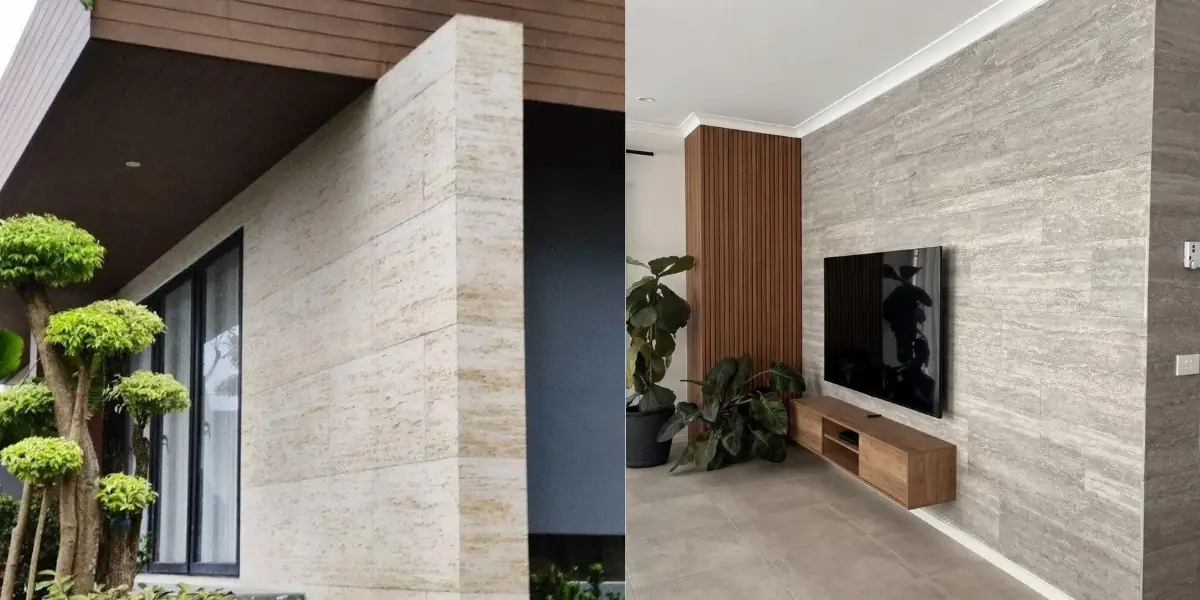
This mineral wall cladding is ideal for:
- Commercial buildings
- Hotels
- Shopping malls
- Apartment buildings
- Office buildings
- High-rise projects
- Interior feature walls
- Exterior facades
- Renovation projects
- Curved architectural designs
When Should You Choose Stone Veneer?
Stone veneer remains a good choice if you:
- Want genuine natural stone
- Prefer traditional masonry aesthetics
- Are working on luxury residential projects
- Don’t mind higher installation costs
- Have an experienced masonry team
Final Verdict
So, are MCM panels better than stone veneer?
For most modern construction and renovation projects, yes.
This modified clay cladding combines the elegant appearance of natural stone with the benefits of lightweight construction, quick installation, flexibility, low maintenance, and excellent weather resistance. These advantages make it an increasingly popular choice for architects, builders, and property owners.
Stone veneer still has its place where authentic natural materials are the priority, but for projects focused on efficiency, sustainability, and long-term value, MCM panels are often the smarter solution.
If you’re looking for a wall cladding material that balances aesthetics, performance, and cost, MCM panels are well worth considering.